Understanding the 5 Stages of Team Development for Remote Collaboration

In this article

Understanding the 5 Stages of Team Development for Remote Collaboration
The 5 stages of team development represent a psychological framework designed to help leaders and members understand how groups evolve from a collection of strangers into a high-performing unit. In 2026, as distributed work becomes the standard, recognizing these phases is essential for maintaining productivity. This model, originally proposed by Bruce Tuckman, outlines a linear path that teams typically follow to reach their full potential. By identifying which phase a group is currently in, organizations can apply the right tools and strategies to accelerate growth.
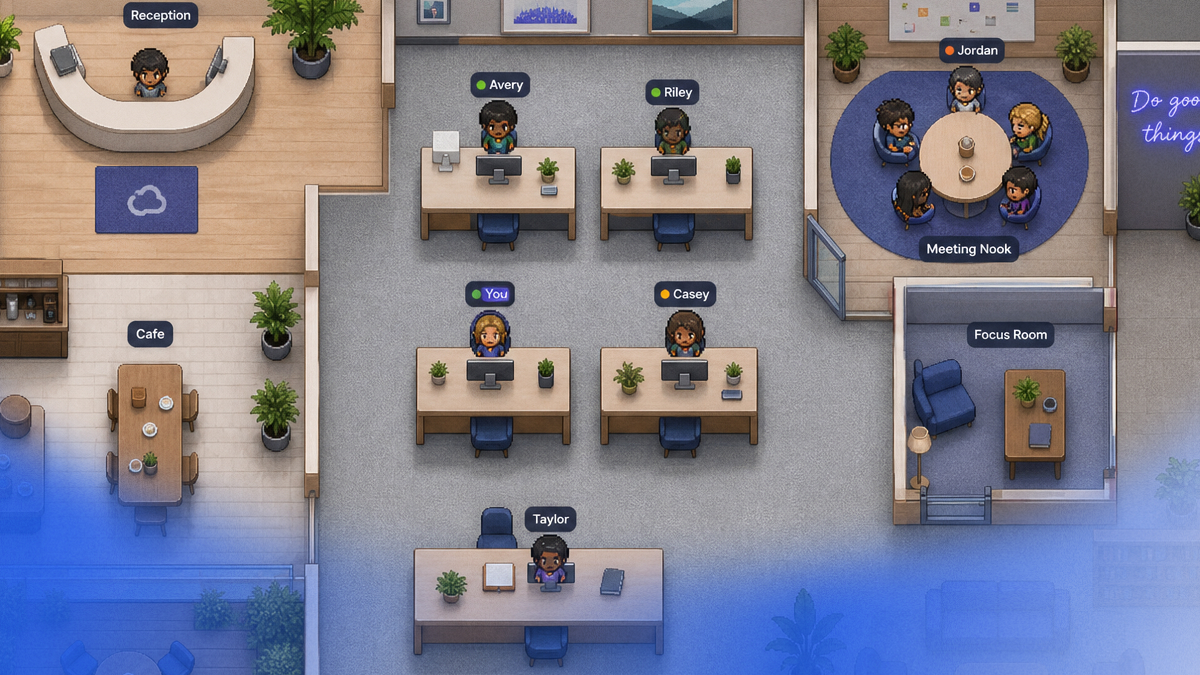
Effective management during the 5 stages of team development requires transparency and real-time awareness. Tools like Hurbly.ai assist this process by providing a virtual office environment where team presence is visible. When members can see who is available or focused, they can navigate the interpersonal challenges of each stage more effectively. Understanding these transitions ensures that communication remains fluid and that the team does not get stuck in early, less productive phases.
Phase 1: Forming and Initial Integration
The first of the 5 stages of team development is Forming. During this period, team members are usually polite, cautious, and observant. Since the group is new, individuals are trying to understand their roles, the scope of the project, and the boundaries of the team hierarchy. In a remote setting, this stage can be challenging because the lack of physical presence makes it harder to gauge the "vibe" of the group.
To successfully navigate this part of the 5 stages of team development, leaders must provide clear direction and define objectives. It is the time to establish communication protocols and social norms. Using a platform like Hurbly.ai during the Forming stage helps reduce the anxiety of "interrupting" others, as new members can clearly see the status of their colleagues. This visibility fosters a sense of belonging and helps the team move toward the next phase with a clearer understanding of their collaborative environment.
Phase 2: Storming and Conflict Resolution
Storming is often considered the most difficult of the 5 stages of team development. As the initial politeness fades, team members begin to push boundaries and express differing opinions on how work should be executed. Conflicts may arise regarding leadership, task distribution, or technical approaches. While this friction can be uncomfortable, it is a necessary step for the team to define its internal culture and resolve underlying tensions.
During the Storming phase of the 5 stages of team development, open communication is vital. If a team avoids conflict, they may never reach the higher levels of performance. Facilitating spontaneous interactions through Hurbly.ai can help resolve these minor misunderstandings quickly before they escalate into major blockers. By seeing when a teammate is available for a quick chat, members can address disagreements in real-time, preventing the build-up of resentment that often stalls progress in this stage.
Phase 3: Norming and Establishing Standards
Once a group moves past initial conflicts, they enter the Norming phase. This is the third of the 5 stages of team development, where members begin to resolve their differences and appreciate one another's strengths. In this stage, the team develops a cohesive workflow and a shared language. People start to feel more comfortable asking for help and providing constructive feedback, leading to a significant increase in collective efficiency.
In the Norming stage of the 5 stages of team development, the focus shifts from individual roles to group harmony. The team establishes "norms" for how they interact and share information. For remote teams, this often involves integrating tools like Hurbly.ai into their daily routine to maintain a constant pulse on team activity. Having a shared virtual space reinforces these norms by making the team's presence and availability a natural part of the workday, further solidifying the bonds formed during this period.
Phase 4: Performing and Peak Efficiency
Performing is the goal of the 5 stages of team development. At this level, the team operates as a well-oiled machine with high levels of autonomy and trust. Members are motivated, knowledgeable, and capable of handling complex decision-making without constant supervision from leadership. The focus is entirely on achieving project goals and maintaining a high standard of output.
| Feature | Impact on Performing Stage |
|---|---|
| Autonomy | Members take full ownership of their tasks. |
| Trust | High confidence in peer reliability and expertise. |
| Fluidity | Communication happens naturally and without friction. |
| Visibility | Real-time awareness via Hurbly.ai supports instant collaboration. |
Reaching the Performing stage of the 5 stages of team development does not mean the work is over; it means the team is now equipped to handle challenges with minimal disruption. In 2026, peak performance is sustained by leveraging technology that mimics the spontaneity of a physical office. By using Hurbly.ai, performing teams can jump into quick huddles or deep-work sessions with full transparency, ensuring that their momentum is never broken by unnecessary scheduling or administrative overhead.
Phase 5: Adjourning and Transitioning
The final part of the 5 stages of team development is Adjourning, also known as mourning. This occurs when a project ends or a team is reorganized. It is a period of transition where members reflect on their achievements and prepare to move on to new challenges. While it marks the end of a specific group dynamic, it is an essential phase for capturing lessons learned and ensuring a positive transition for all individuals involved.
Managing the Adjourning phase within the 5 stages of team development requires acknowledging the team's hard work. Even as the team begins to dissolve, maintaining a sense of presence through Hurbly.ai allows for final wrap-up sessions and social closure. Recognizing the completion of the 5 stages of team development helps individuals carry the skills and relationships they built into their next project, fostering a continuous cycle of professional growth and organizational success.