Effective Management of Ad Hoc Meetings in Remote Work Environments

In this article

Effective Management of Ad Hoc Meetings in Remote Work Environments
Effective team collaboration in 2026 relies on the ability to balance deep focus with immediate communication. In remote settings, ad hoc meetings serve as the primary tool for resolving urgent issues that cannot wait for a scheduled weekly sync. These spontaneous interactions allow team members to clarify doubts, brainstorm solutions, and make decisions in real-time. Unlike structured calendar events, ad hoc meetings are triggered by specific needs, such as a technical bug or a sudden shift in project requirements.
To maintain productivity, organizations must distinguish between productive spontaneity and disruptive interruptions. When ad hoc meetings are handled correctly, they reduce the volume of internal emails and prevent small misunderstandings from escalating into major project delays. Platforms like Hurbly.ai facilitate this by providing real-time visibility into team availability, ensuring that these quick syncs occur only when participants are actually free to talk.
How to Structure Spontaneous Collaboration
While ad hoc meetings are by definition unscheduled, they still require a basic structure to be effective. A common mistake in distributed teams is starting a call without a clear objective, which can lead to "meeting fatigue." To optimize these interactions, participants should follow a streamlined process:
- Identify the Core Issue: Before initiating ad hoc meetings, the organizer must define the specific problem that requires immediate verbal discussion.
- Check Availability: Use a presence-tracking tool to see who is currently in "deep work" mode or already in another session to avoid unnecessary interruptions.
- Keep the Group Small: Only invite the essential stakeholders required to solve the immediate problem.
- Set a Time Limit: Most ad hoc meetings should conclude within 10 to 15 minutes to respect everyone's schedule.
- Document the Outcome: Briefly summarize the decisions made and share them in a shared channel for those who were not present.
By following these steps, ad hoc meetings become surgical strikes of productivity rather than time-wasting distractions. This structured approach ensures that the fluidity of remote work does not come at the cost of individual focus time.
Benefits of Real-Time Presence for Team Syncs
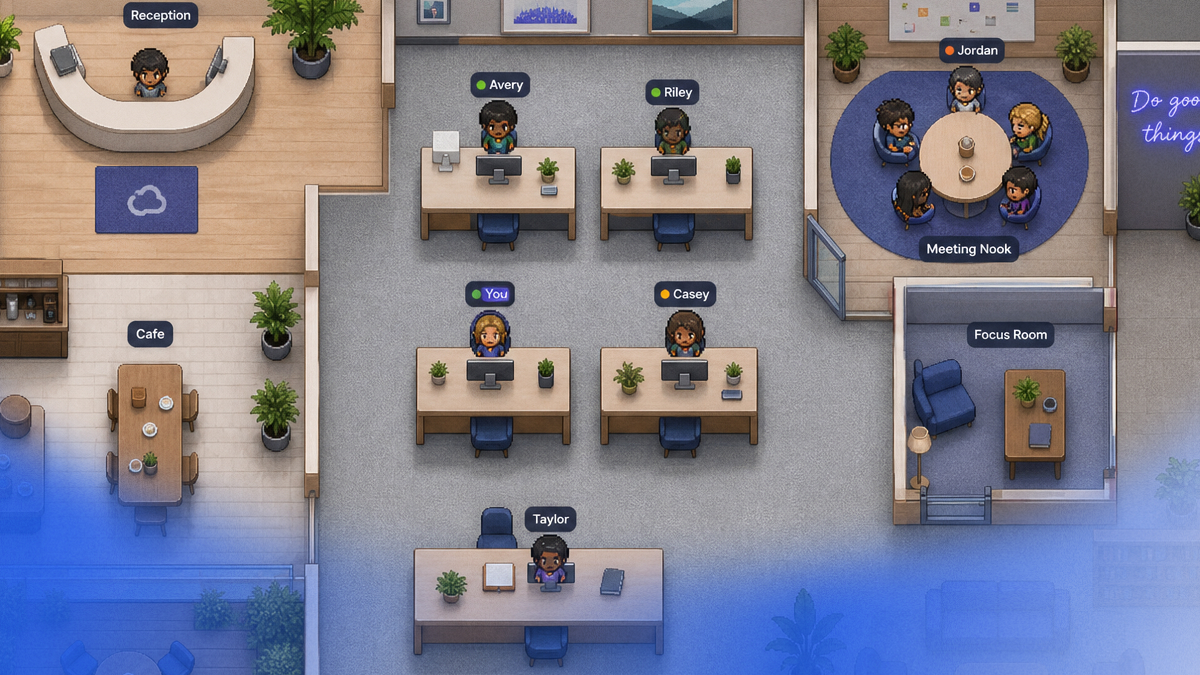
The main challenge of remote work is the lack of physical cues. In a traditional office, you can see if a colleague is wearing headphones or talking to someone else. In a digital environment, Hurbly.ai recreates this awareness, making it easier to decide when to start ad hoc meetings. Having a visual representation of the team’s current status prevents the friction of "pinging" someone who is busy.
| Feature | Impact on Ad Hoc Meetings |
|---|---|
| Real-time Status | Prevents interrupting focused colleagues. |
| Instant Audio Rooms | Reduces the friction of generating links. |
| Visual Office Layout | Increases the sense of belonging and accessibility. |
| One-Click Connection | Speeds up the transition from a question to a solution. |
When teams can see each other's availability, the frequency of successful ad hoc meetings increases while the frustration of missed calls decreases. This transparency is vital for maintaining a fast-paced workflow where information needs to flow freely between different departments and time zones.
Optimizing Remote Workflows with Quick Interactions
In 2026, the most successful remote companies are those that favor agility over rigid bureaucracy. Ad hoc meetings play a central role in this agility by allowing for rapid pivots. When a developer encounters a blocker, a 5-minute conversation is often more effective than a long thread of messages. These ad hoc meetings act as a catalyst for innovation, as they often lead to "aha" moments that rarely happen in formal, high-pressure board meetings.
Furthermore, the social aspect of ad hoc meetings should not be overlooked. In a remote-first world, these brief interactions help maintain the social fabric of the team. Using a platform like Hurbly.ai allows these moments to happen naturally, mimicking the "water cooler" effect. This ensures that ad hoc meetings contribute to both technical problem-solving and the overall mental well-being of the workforce.
Best Practices for Reducing Meeting Fatigue
To prevent ad hoc meetings from becoming a burden, teams must establish clear cultural norms. It is important to foster an environment where "No" is an acceptable answer if someone is in the middle of a critical task. Encouraging the use of "Do Not Disturb" modes ensures that ad hoc meetings do not fragment the day into unusable slices of time.
Effective use of ad hoc meetings involves:
- Prioritizing async communication for non-urgent updates.
- Using video only when visual context is strictly necessary.
- Limiting the frequency of ad hoc meetings per person per day.
By balancing these spontaneous interactions with periods of protected focus, teams can leverage the full power of Hurbly.ai to stay connected without burning out. Ultimately, the goal of ad hoc meetings is to enhance human connection and accelerate work, making the digital office as functional and intuitive as a physical one.