Understanding Agile Development in Modern Remote Workflows

In this article

Understanding Agile Development in Modern Remote Workflows
Agile development is a collaborative approach to software creation that prioritizes iterative progress, team flexibility, and rapid response to change. In 2026, this methodology has evolved beyond simple task management to encompass the entire digital workspace environment. By breaking down large projects into smaller, manageable increments known as sprints, teams can deliver value to users more frequently. This continuous feedback loop ensures that the final product aligns closely with user needs and market demands.
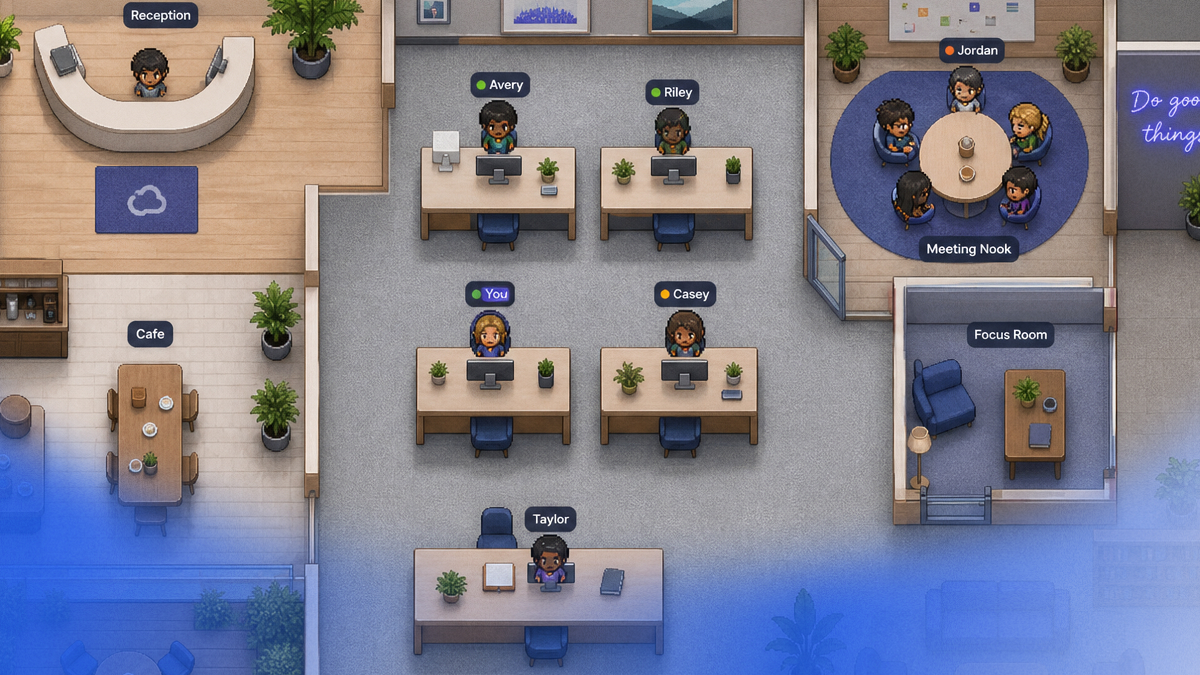
The core of Agile development relies on constant communication and transparency among team members. In a physical office, these interactions happen naturally through proximity. However, as teams move toward distributed models, maintaining the pace of Agile development requires specialized tools that simulate this presence. Platforms like Hurbly.ai provide the real-time visibility necessary to sustain these fast-paced cycles, allowing developers to see who is available for a quick technical sync without the friction of scheduling formal meetings.
How Agile Development Enhances Team Productivity
Implementing Agile development allows teams to focus on high-priority tasks while remaining adaptable. Instead of following a rigid, long-term plan that may become obsolete, teams evaluate their progress at the end of every cycle. This evaluation helps identify bottlenecks early, ensuring that resources are allocated efficiently. Because Agile development encourages self-organizing teams, individual members often feel more empowered to take ownership of their specific modules or features.
To maximize the benefits of Agile development, teams must reduce the "communication tax" often found in remote work. When a developer encounters a blocker, waiting hours for a response can derail a sprint. Using Hurbly.ai helps mitigate this by showing real-time status indicators, such as whether a colleague is deeply focused or open for a chat. This immediate access to peers mimics the "tap on the shoulder" culture of a physical office, which is vital for maintaining the momentum required in Agile development environments.
Essential Components of the Agile Development Lifecycle
The lifecycle of Agile development is built upon several recurring phases that ensure quality and alignment. These phases are designed to be repetitive, allowing the team to learn from each iteration and improve the subsequent one.
- Requirement Analysis: The team defines the goals for the current iteration based on stakeholder feedback and the product backlog.
- Design and Planning: Tasks are distributed among team members, and the technical architecture for the new features is outlined.
- Development: This is the execution phase where the actual coding happens. Agile development thrives here when developers can collaborate instantly on shared logic.
- Testing and Quality Assurance: New code is verified against requirements to ensure no regressions occur.
- Deployment: The increment is released to a staging or production environment.
- Review and Retrospective: The team analyzes what went well and what could be improved for the next cycle of Agile development.
Comparing Traditional Methods and Agile Development
| Feature | Traditional (Waterfall) | Agile Development |
|---|---|---|
| Flexibility | Low; changes are difficult once started. | High; adapts to changing requirements. |
| Delivery | Single release at the end of the project. | Continuous delivery of functional software. |
| Customer Input | Primarily at the beginning and end. | Constant throughout every iteration. |
| Risk Management | High; failures are found late in the process. | Low; issues are identified and fixed early. |
| Team Interaction | Siloed departments with formal handoffs. | Cross-functional teams with daily syncs. |
As shown in the table, Agile development offers a more resilient framework for modern software engineering. It reduces the risk of project failure by ensuring that the team is never more than a few weeks away from a course correction. For remote teams, using Hurbly.ai further strengthens this framework by providing a virtual space where these cross-functional interactions can happen organically.
Strengthening Agile Development with Real-Time Presence
The success of Agile development is often measured by the "velocity" of a team, or how much work they can complete in a single sprint. High velocity is difficult to achieve if team members are isolated. Distributed teams often struggle with the "out of sight, out of mind" problem, which can lead to misalignment. By integrating real-time presence tools, teams can maintain the social fabric and professional transparency required for effective Agile development.
Hurbly.ai supports Agile development by offering a visual map of the team's current state. When a Scrum Master sees that multiple team members are in a "meeting" state, they can adjust expectations for the day's output. Conversely, seeing a "focused" status prevents unnecessary interruptions, protecting the deep work necessary for complex coding tasks. This balance of availability and focus is a cornerstone of a healthy Agile development culture.
Best Practices for Scaling Agile Development in 2026
Scaling Agile development across multiple teams or large organizations requires standardized communication protocols. Without a clear way to see across "squads," large projects can become fragmented. Documentation is important, but it cannot replace the nuance of human conversation. Agile development at scale works best when teams use a combination of asynchronous documentation and synchronous presence.
- Maintain a Shared Virtual Space: Use Hurbly.ai to bridge the gap between different time zones, ensuring everyone knows when the "core hours" for collaboration are happening.
- Keep Sprints Short: Two-week intervals are standard for Agile development, as they provide enough time to build but are short enough to allow for rapid pivots.
- Prioritize the Backlog Daily: Requirements change fast; ensure the most valuable tasks are always at the top.
- Automate Testing: To keep up with the speed of Agile development, manual testing should be minimized in favor of automated suites.
By following these practices, organizations can ensure that their transition to Agile development results in higher quality software and more engaged, connected teams. Using tools like Hurbly.ai ensures that the human element of software engineering is never lost, regardless of where the developers are located.