Effective Strategies for Your Daily Standup Meeting in 2026

In this article

Effective Strategies for Your Daily Standup Meeting in 2026
The daily standup meeting serves as the heartbeat of agile teams, providing a consistent rhythm for synchronization and problem-solving. In a modern work environment, this brief gathering ensures that every team member understands the immediate goals and identifies any obstacles early. By keeping the daily standup meeting focused and time-boxed, usually to 15 minutes, teams can maintain high momentum without the fatigue associated with long, unstructured conferences.
A well-executed daily standup meeting focuses on three core questions: what was accomplished yesterday, what is planned for today, and what blockers are preventing progress. This structure prevents the session from turning into a deep-dive technical discussion or a status report for management. Instead, the daily standup meeting acts as a collaborative planning session where the team realigns its efforts toward the current sprint objectives.
Enhancing Team Presence and Real-Time Collaboration
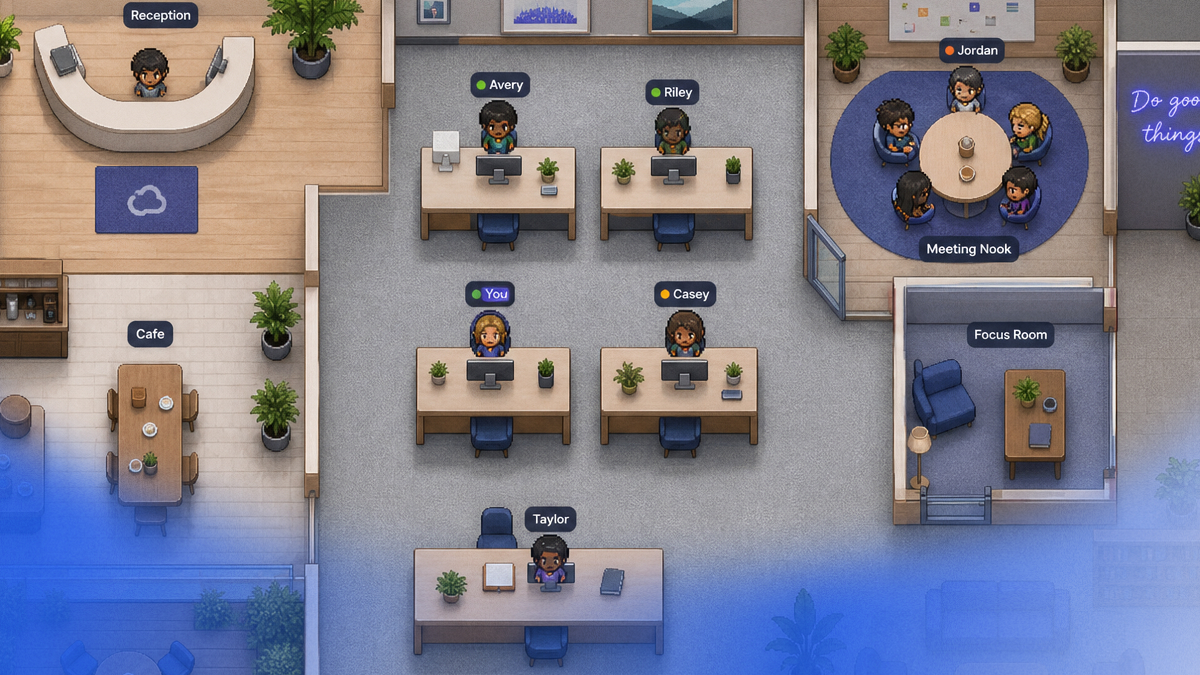
In 2026, remote and distributed teams often face challenges regarding spontaneous communication and visibility. Tools like Hurbly.ai address these gaps by providing a virtual office environment where team presence is visible in real time. When team members can see who is focused or available, they can better prepare for the daily standup meeting by knowing exactly which colleagues have been active on specific tasks.
Integrating real-time presence indicators into your workflow reduces the need for constant messaging. For instance, before the daily standup meeting begins, a quick glance at a virtual office map allows participants to see the current status of their peers. This visibility fosters a sense of shared space, making the daily standup meeting feel more like a natural gathering of colleagues rather than a forced digital appointment.
Structuring the Daily Standup Meeting for Maximum Efficiency
To ensure the daily standup meeting remains productive, teams should follow a clear set of guidelines. Efficiency is the primary goal, as these meetings are meant to kickstart the day, not consume it.
- Stick to the Time Limit: A daily standup meeting should rarely exceed 15 minutes. This encourages participants to be concise and direct.
- Focus on the Board: Use a visual task board to track progress. Referencing specific tickets during the daily standup meeting helps keep the conversation grounded in reality.
- Park Complex Topics: If a technical issue requires a long explanation, "park" it for a separate discussion after the daily standup meeting concludes.
- Rotate the Facilitator: Changing who leads the daily standup meeting keeps the team engaged and prevents the meeting from becoming a one-way report to a single leader.
| Feature | Purpose in the Daily Standup Meeting |
|---|---|
| Status Updates | Briefly share completed work to ensure alignment. |
| Goal Alignment | Confirm that everyone is working toward the same sprint target. |
| Blocker Identification | Surface issues that require immediate team assistance. |
| Presence Tools | Use Hurbly.ai to see availability before and after the session. |
Overcoming Common Obstacles in Remote Syncs
Remote teams often struggle with the "zoom fatigue" associated with a traditional daily standup meeting. To combat this, teams are increasingly turning to platforms that simulate a physical office. By using Hurbly.ai, coworkers can see indicators of focus or availability, which helps them decide the best time to follow up on points raised during the daily standup meeting.
Another common issue is the lack of engagement. When a daily standup meeting becomes repetitive, participants may tune out. To prevent this, teams should emphasize the "why" behind their tasks. Every update in the daily standup meeting should clearly link back to the team's overarching goals, ensuring that every minute spent in the meeting adds value to the project.
The Role of Technology in Team Connectivity
Technology should facilitate, not hinder, the flow of a daily standup meeting. In 2026, the best tools are those that fade into the background while providing essential data. Hurbly.ai supports this by showing who is in a meeting or available for a quick chat, which is particularly useful for resolving blockers identified during the daily standup meeting.
When a blocker is mentioned in the daily standup meeting, the relevant parties can immediately see each other's availability on their virtual office platform. This allows for an instant transition from the formal daily standup meeting to a spontaneous, informal problem-solving session. By replicating the proximity of a physical office, teams can maintain the high-bandwidth communication necessary for agile success.
Final Best Practices for High-Performing Teams
Consistency is the most critical factor for a successful daily standup meeting. Holding the meeting at the same time and place every day builds a habit that minimizes the cognitive load of scheduling. Furthermore, ensuring that the daily standup meeting starts on time, regardless of who is present, respects the schedules of all participants and reinforces the importance of the ritual.
Finally, remember that the daily standup meeting is for the team, by the team. It is a space for peer-to-peer accountability and support. By combining a disciplined daily standup meeting structure with real-time presence tools like Hurbly.ai, modern teams can achieve a level of transparency and collaboration that rivals traditional in-person environments. This holistic approach ensures that the daily standup meeting remains a valuable asset for productivity and team morale.