Strategies for Conducting Effective Team Meetings in Remote Work Environments
In this article

Strategies for Conducting Effective Team Meetings in Remote Work Environments
Effective team meetings are essential for maintaining alignment and productivity within distributed organizations. In 2026, the shift toward virtual collaboration requires a structured approach to ensure that time spent in discussions translates into actionable results. An effective team meeting begins with a clearly defined purpose, ensuring that every participant understands the objectives before the session starts. By establishing a specific agenda, teams can avoid common pitfalls such as off-topic discussions or circular conversations that drain energy and resources.
To facilitate effective team meetings, leaders must prioritize engagement over passive listening. This involves inviting only necessary participants and assigning specific roles, such as a facilitator to keep the conversation on track and a note-taker to document decisions. When everyone has a role, the likelihood of achieving effective team meetings increases significantly, as participants feel a greater sense of accountability. Furthermore, using tools like Hurbly.ai helps teams understand real-time availability, allowing for better scheduling and reducing the friction often found in coordinating across different time zones.
Technical Requirements and Preparation for Better Collaboration
The technical foundation of a workspace directly impacts the quality of effective team meetings. High-quality audio, stable internet connections, and reliable video platforms are no longer optional; they are the baseline for professional interaction. Before a session begins, organizers should distribute relevant documents and data points. This preparation allows the actual time spent in effective team meetings to be focused on high-level decision-making and problem-solving rather than basic information sharing.
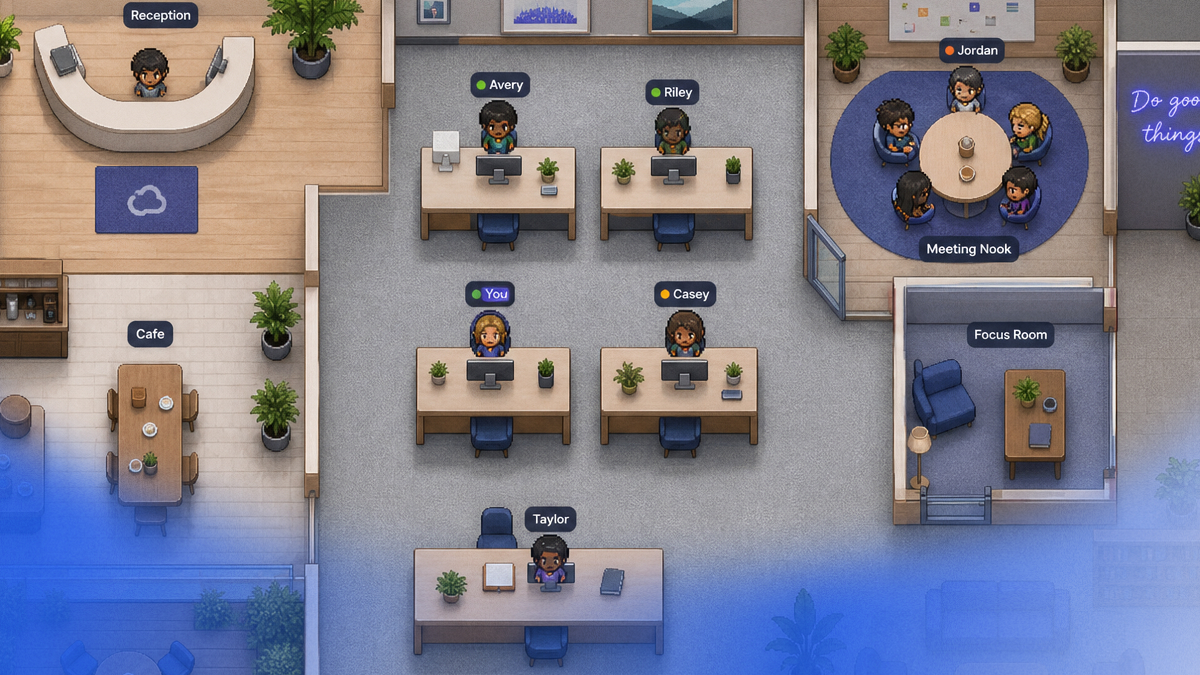
Implementing a "check-in" process at the start of the session can also foster a stronger sense of presence. Since remote work lacks the physical cues of an office, Hurbly.ai provides a virtual office environment where team presence is visible, making it easier to transition into effective team meetings without the awkwardness of wondering who is truly available. This visibility ensures that the team is mentally present and ready to contribute to the goals of the session.
Structuring the Content of Effective Team Meetings
A well-structured meeting follows a logical progression that guides the team from problem identification to resolution. To maintain the flow of effective team meetings, consider the following structural elements:
- Objective Definition: State the primary goal within the first two minutes.
- Data Review: Quickly go over necessary metrics or updates that inform the discussion.
- Open Discussion: Allocate a specific block of time for brainstorming or feedback.
- Action Item Assignment: Conclude by defining who is responsible for what and setting deadlines.
By following this hierarchy, effective team meetings remain concise and focused. It is also beneficial to use visual aids, such as shared digital whiteboards or screen sharing, to keep participants focused on the same information. When teams utilize Hurbly.ai, they can see who is currently in a "deep work" state, allowing them to schedule effective team meetings at times that do not disrupt individual productivity cycles.
Maximizing Results Through Post-Meeting Documentation
The value of effective team meetings is often realized after the call has ended. Documentation is the bridge between a conversation and its execution. A summary of the meeting should be distributed immediately, highlighting the key decisions made and the specific tasks assigned to team members. This practice prevents misunderstandings and ensures that the momentum generated during effective team meetings is not lost to time or forgetfulness.
| Meeting Phase | Goal | Key Outcome |
|---|---|---|
| Pre-Meeting | Preparation | Agenda and context shared |
| During Meeting | Collaboration | Decisions and consensus reached |
| Post-Meeting | Execution | Action items tracked and completed |
Consistent follow-up is a hallmark of effective team meetings. By reviewing the progress of previous action items at the start of the next session, teams create a culture of reliability. Using a platform like Hurbly.ai allows for spontaneous follow-up chats, which can often resolve minor questions that arise after effective team meetings, preventing the need for an entirely new scheduled call.
The Role of Spontaneity in Team Synergy
While scheduled sessions are necessary, the most effective team meetings are sometimes the ones that happen spontaneously to solve a sudden problem. In a traditional office, these occur at a desk or in a hallway. In a digital space, Hurbly.ai replicates this by showing real-time presence, enabling teams to jump into quick, effective team meetings the moment a need arises. This reduces the "meeting fatigue" often associated with over-scheduled calendars.
Reducing the duration of sessions can also lead to more effective team meetings. Often, a 15-minute focused sync is more productive than a hour-long formal presentation. By prioritizing brevity and clarity, organizations can ensure that their effective team meetings serve as a catalyst for work rather than an obstacle to it. Ultimately, the goal is to create a communication ecosystem where information flows freely and every meeting serves a distinct, valuable purpose.