How to Keep Remote Employees Engaged and Motivated (Without Burning Them Out)

In this article

There's a particular kind of remote work fatigue that doesn't show up in anyone's deliverables at first. Emails still get answered. Deadlines still get met. The metrics look fine. But something has shifted, and if you're paying attention, you can feel it. Meetings are quieter. Enthusiasm has gone down a notch. People are logging off exactly at 5:00 PM after months of staying late because they genuinely wanted to. The Slack GIFs have stopped.
This is remote disengagement, and it's sneaky precisely because it hides behind professionalism. People who care about their work keep showing up even when the motivation has faded. They coast on habit and obligation. But coast long enough, and eventually they find something better, or they stay and become the kind of quietly resentful employee who slowly erodes team morale just by being present without being present.
Keeping remote employees engaged is one of the most important challenges of distributed work, and it's also one of the most misunderstood. Engagement isn't about perks and performance. It's about meaning, belonging, and autonomy. Get those three things right, and motivation takes care of itself. Get them wrong, and no amount of team-building activities will fix it.
What Remote Employee Engagement Actually Means
Let's separate engagement from its imposters. Engagement is not:
- Answering messages quickly
- Attending every meeting
- Working long hours
- Looking happy on video calls
Engaged employees might do some of those things, but they're not what engagement is. Engagement is the degree to which someone feels invested in their work, connected to their team, and aligned with the organization's purpose. It's intrinsic, it comes from inside the person, but it's heavily influenced by the environment you create around them.
Gallup's research on employee engagement has found consistently that only about a third of employees are engaged at work, and that number tends to be even lower for remote workers who haven't been given the right environment. The cost of disengagement is enormous: lower productivity, higher turnover, poorer customer outcomes, and a general drag on team culture.
The three pillars of engagement in remote contexts are:
Meaning — Do they understand why their work matters? Can they see how their contribution connects to something bigger?
Belonging — Do they feel like a real member of the team, not just a remote contractor who happens to share a Slack workspace?
Autonomy — Do they have control over how they work, or do they feel micromanaged and constrained?
The strategies below work because they address one or more of these pillars directly.
Make the Work Itself More Meaningful
The most powerful driver of engagement isn't team-building events or recognition programs, it's the work itself. People who find their work meaningful are naturally motivated. So the first question to ask is: does your team understand why what they do matters?
This sounds obvious, but remote workers are often especially disconnected from impact. In an office, you might walk past a customer success call and hear about the impact of the product you just built. Remote workers miss those ambient signals. You have to create intentional ones.
Share impact stories regularly. When a customer success story comes in, share it with the whole team — not just the sales or CS department. When a feature you built helps a specific user in a specific way, name it. Make the impact human and concrete, not just numerical.
Connect individual work to team goals. In one-on-ones, explicitly connect what the person is working on to the team's priorities and the company's mission. "This feature you're building is going to directly affect our ability to expand into the EU market, here's why that matters." Specificity makes it real.
Give people problems to solve, not just tasks to execute. Engaged people feel like they're contributing their brains, not just their hands. Where possible, involve team members in defining the "how" of their work, not just delivering against a spec. Ownership and investment go together.
Celebrate progress, not just outcomes. Harvard research on the psychology of motivation (Teresa Amabile's Progress Principle) found that the single biggest driver of daily motivation is making progress on meaningful work, even small progress. Acknowledge it. Notice it. Make it visible.
Invest in Genuine Connection
Remote employees who feel genuinely connected to their teammates are more engaged, more resilient, more creative, and less likely to leave. The science on this is overwhelming. Belonging is a fundamental human need, and when it's met at work, people invest more of themselves.
For engagement specifically, the most high-leverage connection investments are:
Regular meaningful one-on-ones. Not status updates, actual conversations about the person's experience, growth, challenges, and how they're feeling. Once a week for 30-45 minutes, with a manager who genuinely cares and listens. This single practice, done well, has more impact on engagement than almost anything else.
Peer relationships beyond the project layer. Encourage cross-functional connections. Create spaces for people to interact with teammates outside their immediate working group. Diversity of connection within a company builds loyalty to the organization, not just the team.
Visibility of the whole team. When remote employees only interact with their immediate working group, they can start to feel disconnected from the larger company. Company-wide or department-wide touchpoints, all-hands meetings, shared announcements, visible leadership communication, maintain the sense of being part of something bigger.
Protect Autonomy (And Micromanage Nothing)
Remote work promised flexibility and autonomy. When managers don't deliver on that promise, tracking hours, requiring constant availability, checking in excessively, it creates a deep resentment that is very hard to recover from.
Autonomy is one of the most powerful predictors of intrinsic motivation. Dan Pink's research on motivation shows that people are most motivated when they have control over their time, their methods, and their goals. Remote work should be the perfect environment for this. Unfortunately, many managers respond to the visibility gap of remote work with increased oversight, which backfires spectacularly.
Trust by default. Start from a position of trust rather than suspicion. Judge people by their outputs, not their online status. Respect boundaries around after-hours communication. Assume good faith.
Flexible schedules where possible. Not every role needs a 9-to-5. If your team includes people in different time zones or with different personal needs, rigid hours create resentment without improving output. Define when overlap is required and leave the rest to individual judgment.
Give ownership, not assignments. Let people own their projects from definition through delivery. Brief them on the goal and the constraints, then get out of the way. Check in at milestones, not daily. This communicates trust and creates the kind of accountability that comes from caring about the outcome.
Make "how" flexible, not just "when." People work differently. Some are morning people. Some do their best work in deep-focus blocks. Some need lots of short breaks. Where outcomes are the north star, the path to them can be personal.
Recognition That Actually Means Something
Recognition is one of the most commonly cited drivers of employee engagement, and one of the things remote teams most frequently get wrong. Generic recognition (a thumbs-up in Slack, a quarterly shoutout in an all-hands) is better than nothing, but it doesn't move the needle much. Specific, timely, public, and personal recognition does.
Be specific. "Great job this week!" tells someone you noticed they existed. "The way you handled that client escalation on Tuesday, stepping up immediately, staying calm, finding a creative solution, was genuinely impressive and saved the relationship" tells them you actually see them.
Be timely. Recognition has a half-life. The closer to the moment of the achievement, the stronger the impact. Don't save it for the quarterly review, say it in the meeting, in the channel, in the DM, right now.
Make it public (when appropriate). Public recognition validates the person in front of their peers, which multiplies its effect. A dedicated channel for peer-to-peer shoutouts (like #kudos or #wins) is a low-effort, high-impact tool.
Recognize the person, not just the output. Character and values recognition is as important as results recognition. "You always make time for junior team members" or "your positivity during a really hard sprint made a huge difference to everyone" acknowledges the person, not just what they produced.
Let peers recognize each other. Manager recognition matters, but peer recognition can be even more meaningful. Create the infrastructure for it and make it a cultural expectation that people celebrate each other.
Support Growth and Development
Motivated people want to grow. Stagnation is one of the quiet killers of remote employee engagement, when someone feels like they're doing the same thing forever with no path forward, they start looking for that path elsewhere.
Clear career conversations. Regular discussion (at least quarterly) about where someone wants to go, what skills they want to develop, and how their current role connects to that future. Not a performance review, a genuine forward-looking conversation.
Learning budgets and time. Invest in your team's growth with dedicated learning budgets and protected time to use them. When companies put resources behind development, it sends a powerful signal that they're invested in the person's future.
Stretch assignments. Offer opportunities to work outside someone's normal scope, leading a cross-functional project, presenting to leadership, mentoring a junior colleague. These experiences build skills, visibility, and engagement simultaneously.
Internal mobility. When great employees feel like the only path forward requires leaving the company, they leave. Make internal movement visible, encouraged, and feasible.
How Hurbly Keeps Remote Teams Energized Every Day
Engagement strategies live or die by their infrastructure. You can have the best intentions in the world, but if your team is scattered across disconnected apps with no sense of shared space, it's hard for any of it to stick.
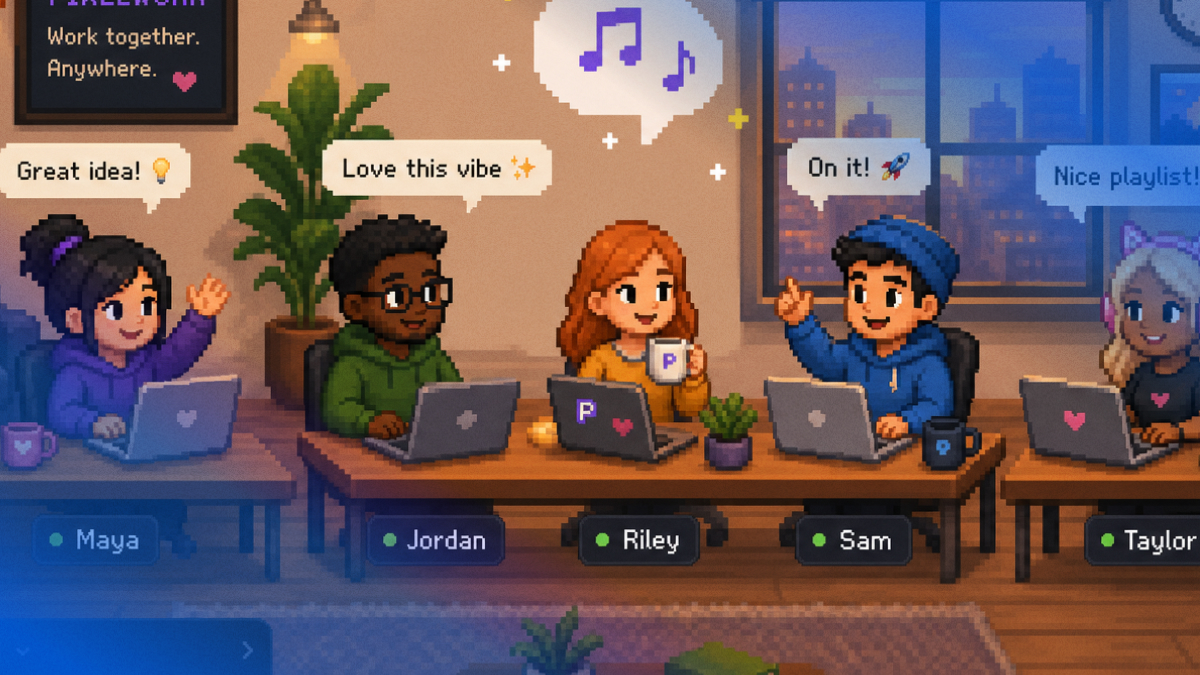
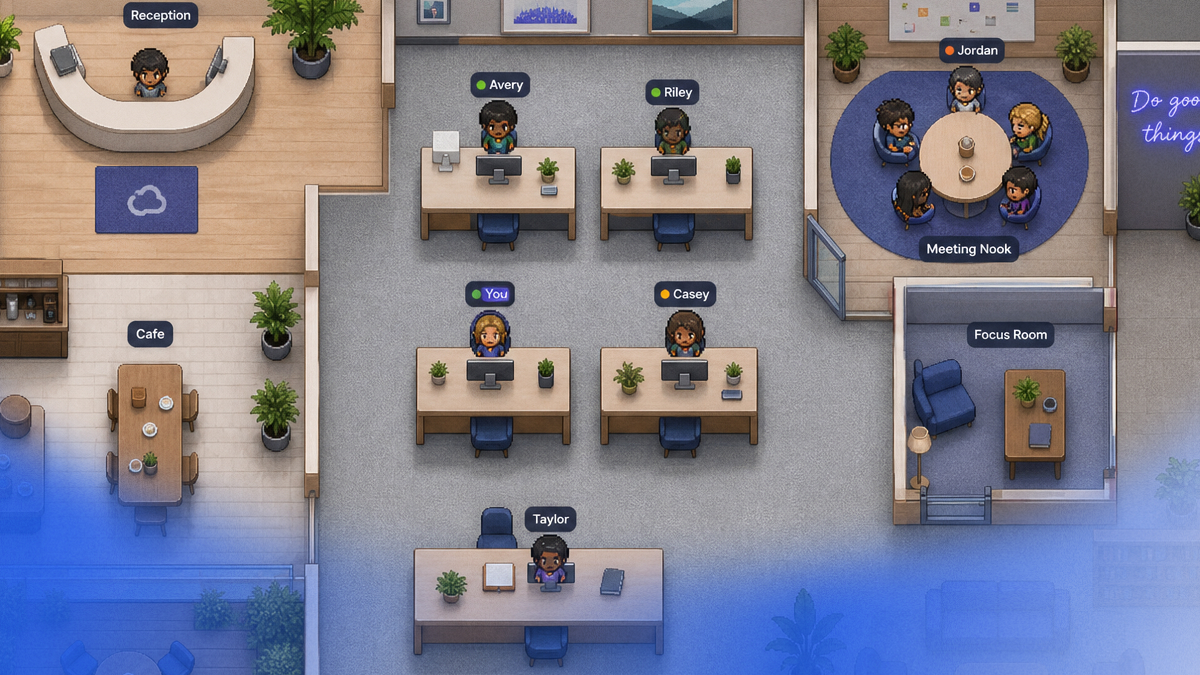
Hurbly creates the environment that makes engagement strategies work. When your team has a shared virtual office where they can see each other, move around, have spontaneous conversations, and feel like they're genuinely working together, not just co-existing in a project management tool, engagement becomes more natural.
The ambient presence Hurbly provides means recognition happens in real time. Collaboration sparks when people are co-located virtually. The sense of being on a team that's actually going somewhere together is palpable rather than theoretical. It's not a substitute for the strategies above, it's the foundation that makes them possible.
Try Hurbly free for 30 days and feel the difference in your team's energy.
Frequently Asked Questions
Q: How do I know if my remote employees are actually disengaged vs. just introverted?
A: Look for changes over time, not just current behavior. An introvert who participates minimally in social activities but consistently delivers quality work, gives thoughtful input in meetings, and seems energized by their projects is probably fine. Someone whose quality is slipping, whose communication has gone flat, who's stopped contributing ideas, or who seems to be going through the motions, that's a disengagement signal worth addressing directly in a one-on-one.
Q: Should we track productivity metrics to measure engagement?
A: Productivity metrics can be useful context but are a poor direct measure of engagement. Someone can be very productive while deeply disengaged (they're finishing tasks to feel done with them). Better signals: quality of work, innovation and initiative, participation in team conversations, one-on-one conversations about motivation, and pulse survey results. Don't confuse output with investment.
Q: How much does compensation affect remote employee engagement?
A: Compensation matters, people who feel underpaid relative to market are significantly harder to engage, and no culture initiative fixes that. But research consistently shows that beyond a fair compensation threshold, other factors (meaning, autonomy, belonging, growth) are more powerful drivers of sustained engagement than pay increases. Money brings people to the table; everything else keeps them invested.
Q: What do I do if a previously engaged remote employee starts showing signs of disengagement?
A: Act early and directly. Have a private, genuine conversation, not a performance review, but a care conversation. "I've noticed you seem less energized lately than you were a few months ago, I want to understand what's going on, not to evaluate you, just because I care about your experience here." Often, people just need to know someone noticed and someone cares. Then listen. The answer to their disengagement is usually in what they share.
Q: Can remote engagement be as high as in-person engagement?
A: Yes, there's no inherent ceiling on remote employee engagement relative to in-person. Some of the most engaged teams in the world are fully remote. The difference is intentionality: remote engagement requires design, while in-person engagement often happens partly by default. With the right structures, tools, and culture, remote teams can match or exceed the engagement levels of their in-person counterparts.
Want your remote team to actually feel connected? Try Hurbly free for 30 days →