Effective Strategies for Scheduling Meetings Across Time Zones in 2026

In this article

Effective Strategies for Scheduling Meetings Across Time Zones in 2026
Scheduling meetings across time zones requires a strategic approach to balance team productivity with individual well-being. As remote work becomes the global standard in 2026, the challenge lies in coordinating diverse schedules without causing digital fatigue. Effective coordination involves understanding geographical offsets and utilizing tools that provide real-time visibility into colleague availability. By prioritizing asynchronous communication for non-urgent matters, teams can reserve synchronous time for high-impact collaboration.
The complexity of scheduling meetings across time zones often stems from the mathematical difficulty of finding overlapping windows. When a team spans from Tokyo to New York, the available "golden hours" are extremely limited. To manage this, organizations must establish clear protocols regarding core working hours. This ensures that everyone knows when they are expected to be available for live interaction, making the process of scheduling meetings across time zones more predictable and less intrusive on personal time.
Leveraging Real-Time Presence for Better Coordination
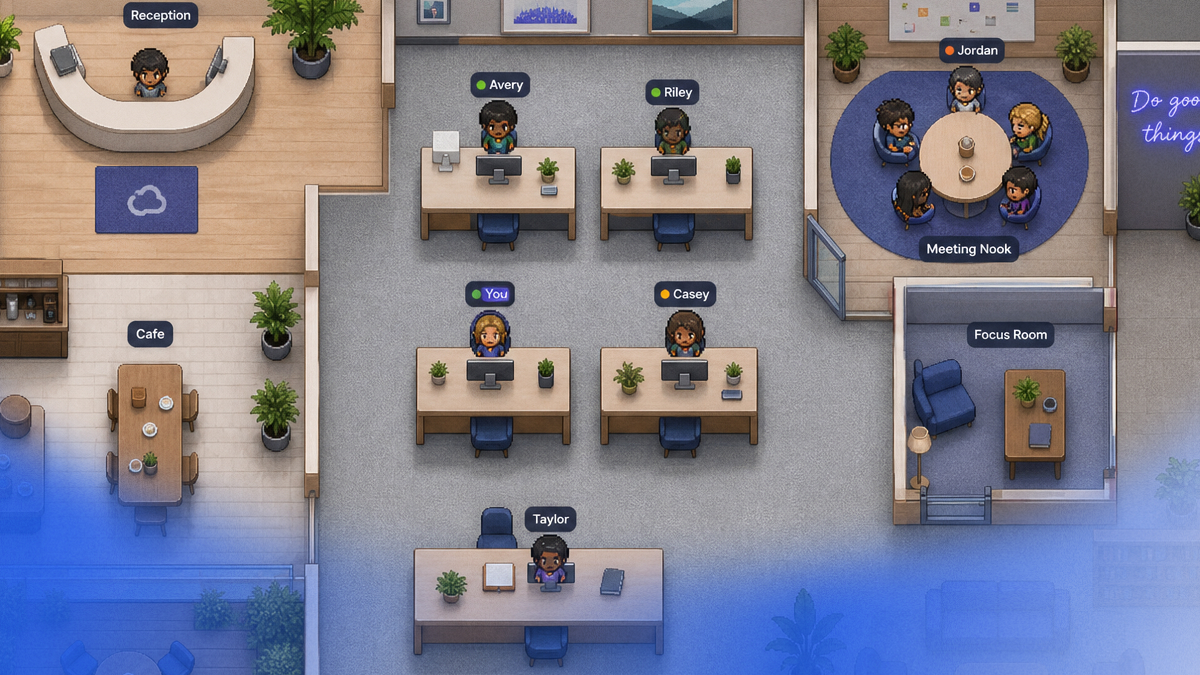
Modern distributed teams are moving away from traditional calendar-blocking and toward presence-based interaction. Platforms like Hurbly.ai facilitate this by showing exactly who is focused, available, or already in a discussion. This real-time data simplifies scheduling meetings across time zones because it removes the guesswork of wondering if a colleague in a different region has started their day or stepped away for a break. Instead of sending a calendar invite blindly, users can see the current status of their peers.
When you can see a visual representation of your virtual office, scheduling meetings across time zones becomes a more fluid process. You can identify natural gaps in a colleague's schedule that might not be reflected on a static calendar. This transparency reduces the back-and-forth emails typically associated with finding a common time. By integrating presence indicators, teams can foster spontaneous collaboration, which often replaces the need for formal scheduling meetings across time zones for quick check-ins.
Best Practices for Global Team Alignment
To maintain a healthy work-life balance while scheduling meetings across time zones, teams should implement a rotational system for inconvenient meeting times. If a specific time slot is early for one group and late for another, alternating the burden ensures fairness. This practice prevents burnout and demonstrates respect for the local time of every team member. Consistent rotation is a cornerstone of sustainable global operations when scheduling meetings across time zones.
- Define Core Hours: Establish a 3-4 hour window where all time zones overlap for essential syncs.
- Record Everything: Ensure that any session resulting from scheduling meetings across time zones is recorded for those who absolutely cannot attend.
- Use Visual Maps: Utilize world clock converters to visualize the day-night cycle of your entire team before proposing a time.
- Audit Meeting Necessity: Before scheduling meetings across time zones, ask if the objective can be met via a shared document or a recorded video brief.
Technical Tools for Streamlining Global Calendars
The technical aspect of scheduling meetings across time zones involves more than just a shared calendar. It requires a centralized source of truth that automatically adjusts for daylight savings and regional holidays. In 2026, automation plays a significant role in identifying the least disruptive times for all participants. High-quality coordination tools now suggest optimal windows based on historical activity patterns, further refining the act of scheduling meetings across time zones.
Using a virtual office environment like Hurbly.ai allows for a more organic flow of information. When team members can see each other's status, the pressure of scheduling meetings across time zones for every minor detail is relieved. This "presence-first" approach encourages shorter, more frequent interactions that happen naturally during overlapping hours. Consequently, the heavy lifting of scheduling meetings across time zones is reserved only for major milestones or strategic planning sessions.
Improving Efficiency in Distributed Workflows
Efficiency in a global setting is achieved by reducing the friction of coordination. Scheduling meetings across time zones is often the biggest bottleneck in project management. To overcome this, teams should adopt a "documentation-first" culture. When information is readily available in writing, the urgency of scheduling meetings across time zones decreases, allowing the synchronous time that does occur to be much more focused and productive.
- Analyze Time Zone Distribution: Map out where every employee is located to identify the most challenging gaps.
- Set Communication Tiers: Determine which topics require scheduling meetings across time zones and which can stay in chat or email.
- Implement Presence Tools: Use Hurbly.ai to visualize the team's live status across the globe.
- Evaluate and Adjust: Monthly reviews of meeting times can help identify if the current approach to scheduling meetings across time zones is causing fatigue.
The Role of Spontaneity in Remote Environments
One often overlooked element of scheduling meetings across time zones is the loss of "watercooler" moments. Virtual office platforms aim to replicate this by showing availability in real-time. This allows for "instant meetings" that don't require the formal process of scheduling meetings across time zones days in advance. If two people see each other active at the same time, they can jump into a quick audio or video call, solving problems faster than a scheduled event ever could.
Ultimately, the goal of scheduling meetings across time zones should be to maximize collective output while minimizing individual disruption. By combining smart scheduling habits with real-time presence technology, teams can bridge the geographical gap. Whether through formal scheduling meetings across time zones or spontaneous interactions enabled by Hurbly.ai, the focus remains on clear communication and mutual respect for global schedules. This balanced approach is essential for any high-performing team operating in 2026.