Effective Screen Sharing Strategies for Remote Team Collaboration in 2026
In this article

Effective Screen Sharing Strategies for Remote Team Collaboration in 2026
Effective communication in distributed environments relies heavily on the ability to visualize complex ideas in real time. Screen sharing serves as a vital bridge, allowing team members to project their digital workspace to colleagues instantly. This technology eliminates the ambiguity of verbal descriptions by providing a direct visual reference for documents, code, or design prototypes. When teams integrate screen sharing into their daily workflows, they reduce the time spent explaining concepts and increase the time spent solving problems.
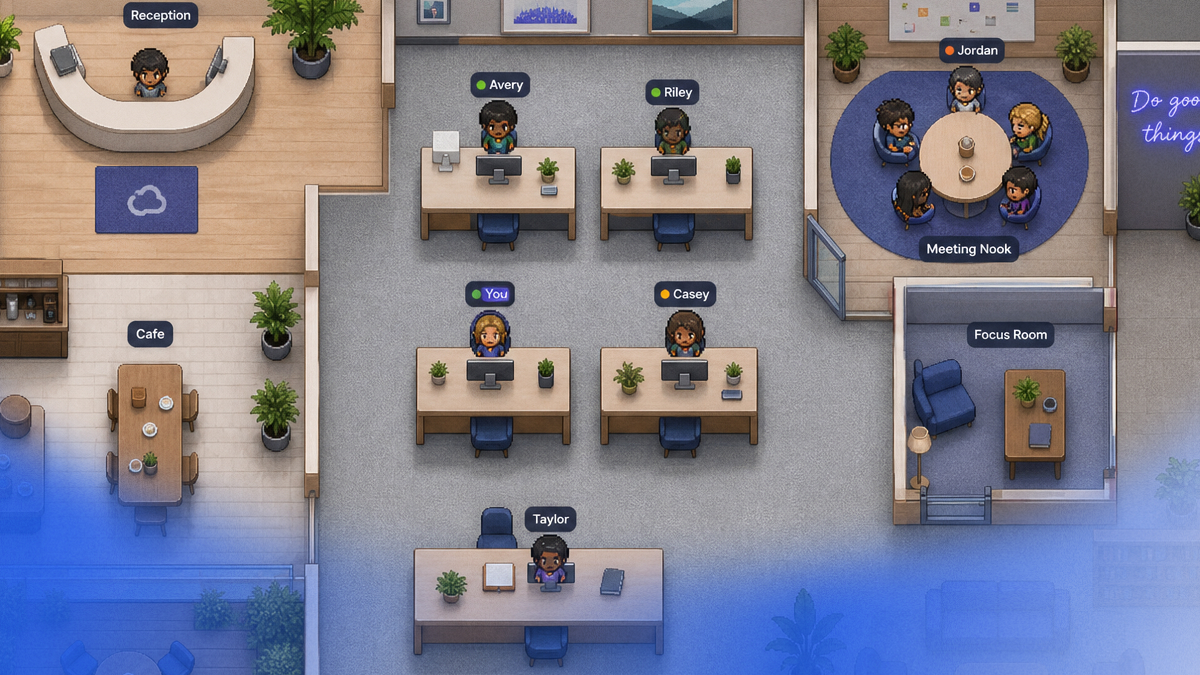
The technical foundation of screen sharing involves capturing the graphical output of a device and transmitting it via low-latency protocols to other participants. In 2026, this process has become highly optimized, ensuring that high-resolution details remain crisp even on lower bandwidth connections. By using Hurbly.ai, remote teams can transition from seeing who is available to launching a screen sharing session with a single click, mirroring the spontaneous desk-side chats found in physical offices.
Enhancing Technical Support and Troubleshooting
Technical troubleshooting is significantly more efficient when support agents or senior developers utilize screen sharing to observe issues firsthand. Instead of relying on static screenshots or vague error descriptions, the person providing assistance can watch the user's workflow in real time. This visibility allows for the immediate identification of configuration errors or UI bugs that might otherwise take hours to document and replicate.
During a screen sharing session focused on support, participants can often use remote annotation tools to highlight specific areas of the interface. This interactive layer ensures that the person receiving help understands exactly which buttons to click or which lines of code require adjustment. Furthermore, screen sharing facilitates "pair programming" or collaborative editing, where two individuals work on the same file simultaneously to ensure high-quality output and knowledge transfer.
Best Practices for Secure and Professional Presentations
Maintaining privacy and professionalism is essential when initiating a screen sharing instance. Before starting, users should clear their desktops of sensitive files and close unnecessary applications or browser tabs that might contain private information. Many modern platforms now offer the ability to select a specific window for screen sharing rather than the entire desktop, which is a critical security measure for protecting internal data during external meetings.
To ensure a smooth experience for all participants, consider the following steps:
- Disable desktop notifications to prevent private messages from appearing during the screen sharing process.
- Check your internet stability to avoid lag or pixelation that can disrupt the visual flow.
- Use a high-contrast cursor or "spotlight" tool to help viewers follow your movements across the screen.
- Confirm that all participants can see the shared content before diving into the detailed explanation.
Implementing these habits ensures that screen sharing remains a productive tool rather than a source of distraction or data leakage.
Improving Remote Training and Onboarding
Onboarding new employees in a remote setting requires clear demonstrations of internal tools and company processes. Screen sharing allows HR managers and team leads to walk new hires through software interfaces, folder structures, and communication protocols as if they were sitting in the same room. This direct observation helps the new hire retain information more effectively than reading a static manual or watching a pre-recorded video.
In 2026, the use of Hurbly.ai helps teams maintain this level of organic training by showing when mentors are free for a quick screen sharing walkthrough. This reduces the friction of scheduling formal meetings for small questions. By utilizing screen sharing for live demonstrations, organizations can foster a culture of continuous learning where knowledge is shared dynamically and questions are answered through active visual participation.
Comparative Benefits of Visual Collaboration Tools
| Feature | Impact on Remote Teams | Role of Screen Sharing |
|---|---|---|
| Real-time Feedback | Reduces revision cycles and prevents misunderstandings. | High: Provides the visual context needed for immediate critique. |
| Knowledge Transfer | Ensures team members learn specific workflows and shortcuts. | High: Allows experts to demonstrate complex tasks live. |
| Engagement | Keeps participants focused on the specific topic being discussed. | Medium: Visuals help maintain attention during long sessions. |
| Transparency | Builds trust by showing work-in-progress and open processes. | High: Screen sharing makes the "how" of work visible to others. |
Modern collaboration relies on these features to bridge the gap between different time zones and physical locations. When screen sharing is used consistently, the digital workspace becomes more transparent, and the barriers to effective communication are significantly lowered.
Future Trends in Collaborative Screen Sharing
As we progress through 2026, screen sharing technology continues to evolve beyond simple video streaming. We are seeing the rise of multi-user screen sharing, where several participants can project their screens into a shared virtual space simultaneously for side-by-side comparison. This is particularly useful for design reviews where different versions of a project need to be evaluated at once.
Platforms like Hurbly.ai are at the forefront of this evolution by integrating presence indicators with instant communication tools. This integration ensures that screen sharing is not just a feature used in scheduled calls, but a core component of spontaneous team interaction. By making screen sharing more accessible and less formal, teams can achieve a higher level of agility and maintain a strong sense of shared purpose, regardless of where individual members are located.