Enhancing Collaboration with Screen Sharing for Remote Teams in 2026

In this article

Enhancing Collaboration with Screen Sharing for Remote Teams in 2026
Effective communication in a distributed workforce depends on more than just text-based messaging. In 2026, the primary challenge for digital workspaces is replicating the fluid, high-bandwidth interaction found in physical offices. Utilizing screen sharing for remote teams has become a fundamental requirement for troubleshooting, collaborative design, and real-time data analysis. By allowing multiple participants to view the same interface simultaneously, teams can eliminate the ambiguity often found in long email chains or static screenshots.
The technical foundation of screen sharing for remote teams involves capturing a user's display buffer and transmitting it via low-latency protocols to other participants. This process allows for immediate visual feedback and collective problem-solving. When integrated into a virtual office environment like Hurbly.ai, these tools help bridge the gap between isolated home offices and a cohesive team atmosphere. This visibility ensures that everyone stays on the same page, literally and figuratively, during complex project executions.
How Screen Sharing for Remote Teams Facilitates Real-Time Problem Solving
When a technical issue arises, explaining the problem through text is often inefficient. Implementing screen sharing for remote teams allows a developer or designer to show the exact error or layout issue as it occurs. This "show, don't tell" approach reduces the time spent on diagnostic questions and speeds up the resolution process. It transforms a passive observation into an active, collaborative session where team members can provide instant guidance.
Modern workflows rely on the following benefits of screen sharing for remote teams:
- Visual Context: Participants see the exact steps taken to reach a specific outcome, which is vital for software debugging.
- Reduced Misinterpretation: Eliminates the guesswork involved in describing complex UI/UX elements or spreadsheet formulas.
- Synchronized Navigation: Leads all team members through a specific workflow or document at the same pace.
- Live Annotations: Many platforms allow users to draw or highlight specific areas of the shared screen to direct attention to key details.
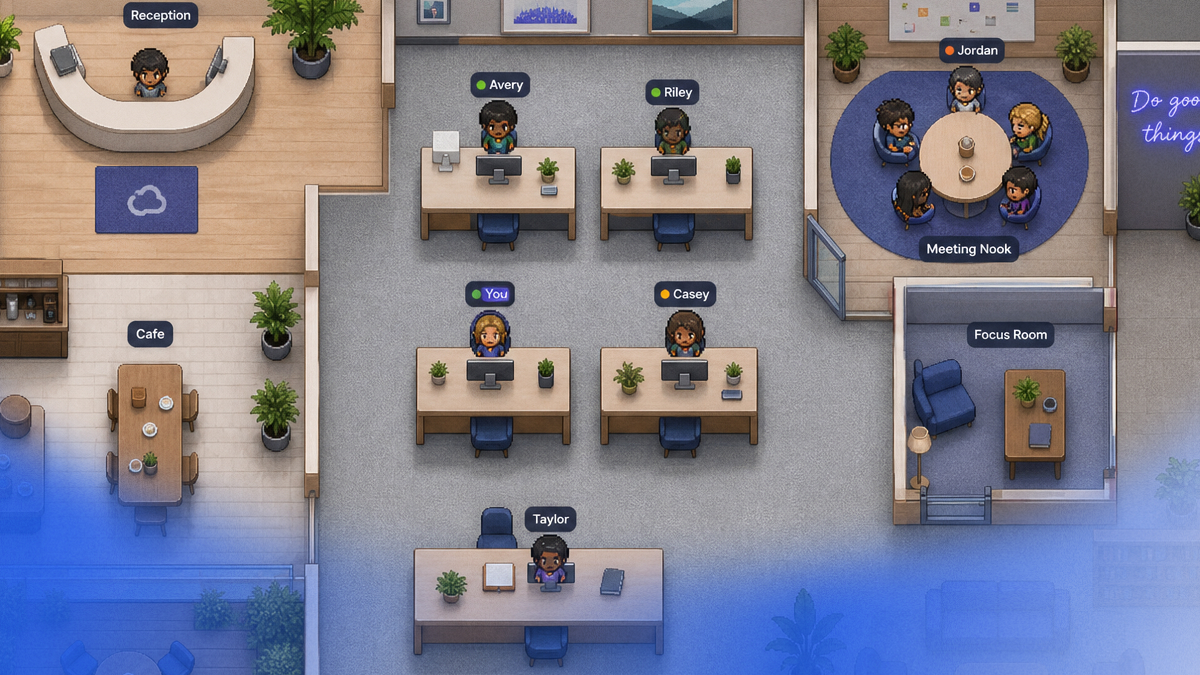
Integrating these capabilities into a daily routine allows for more spontaneous interactions. For instance, platforms like Hurbly.ai enable users to see who is available and jump into a session where screen sharing for remote teams can be activated instantly, mimicking the act of walking over to a colleague's desk to look at their monitor.
Strategic Integration of Screen Sharing for Remote Teams in Virtual Offices
The evolution of the digital workspace has moved beyond simple video calls toward persistent virtual environments. In these spaces, screen sharing for remote teams serves as a bridge for spontaneous collaboration. Instead of scheduling a formal meeting thirty minutes in advance, a team member can initiate a quick session to review a line of code or a marketing graphic. This immediacy is crucial for maintaining momentum in fast-paced industries.
| Feature | Impact on Remote Work |
|---|---|
| Instant Visual Access | Reduces the need for back-and-forth messaging. |
| Collaborative Editing | Multiple users can provide input on a single live document. |
| Knowledge Transfer | Experienced members can demonstrate tasks via screen sharing for remote teams. |
| Engagement Tracking | Ensures all participants are focused on the same material during a presentation. |
By prioritizing screen sharing for remote teams, organizations can foster a culture of transparency. When work-in-progress is shared frequently, feedback loops become shorter and more accurate. Hurbly.ai supports this by showing real-time presence, making it clear when a colleague is open for a quick collaborative session involving screen sharing for remote teams.
Improving Training and Onboarding Through Screen Sharing for Remote Teams
Onboarding new employees in a remote setting can be difficult without the ability to watch over a mentor's shoulder. Using screen sharing for remote teams provides a direct window into the company's tools and internal processes. New hires can observe how experienced staff navigate internal systems, handle specific software, and manage their daily tasks. This observational learning is one of the fastest ways to transfer institutional knowledge.
To maximize the effectiveness of screen sharing for remote teams during training, mentors should follow a structured approach:
- Demonstration: The mentor shares their screen to perform a task while explaining the logic behind each action.
- Guided Practice: The trainee shares their screen while the mentor provides real-time verbal guidance.
- Collaborative Review: Both parties use screen sharing for remote teams to review the completed work and identify areas for improvement.
This interactive methodology ensures that the trainee is not just a passive observer but an active participant in their own learning process. The use of screen sharing for remote teams in this context builds confidence and reduces the isolation often felt by new remote workers.
Security and Best Practices for Screen Sharing for Remote Teams
While the benefits are numerous, the use of screen sharing for remote teams requires a focus on privacy and security. Users must be mindful of what information is visible on their monitors before initiating a session. This includes closing unnecessary tabs, hiding sensitive notifications, and ensuring that personal data is not exposed to the group. Professionalism in a virtual office environment is maintained through these small but significant habits.
Effective screen sharing for remote teams is most successful when the following best practices are observed:
- Clean Desktop Policy: Keep the desktop organized to avoid distractions during the share session.
- Notification Management: Disable pop-up alerts for emails or messaging apps to protect privacy.
- Audio Coordination: Ensure that the audio quality is clear so that the visual cues provided by screen sharing for remote teams are accompanied by understandable context.
- Permission Control: Use platforms that allow the host to grant or revoke control of the screen easily.
As we move further into 2026, the reliance on screen sharing for remote teams will only increase. Tools like Hurbly.ai are designed to make these interactions feel natural and integrated into the daily flow of work. By mastering the use of screen sharing for remote teams, organizations can ensure their distributed workforce remains as productive and connected as any traditional office-based team.