Understanding Slack Huddles for Efficient Remote Team Collaboration
In this article

Understanding Slack Huddles for Efficient Remote Team Collaboration
In 2026, digital communication has evolved beyond simple text messaging. Slack Huddles serve as a dedicated audio and video environment designed for quick, informal discussions within a workspace. Instead of scheduling a formal meeting on a calendar, users can start Slack Huddles to resolve issues in real-time. This feature mimics the experience of walking over to a colleague's desk to ask a quick question, making it a vital tool for distributed teams.
The core functionality of Slack Huddles revolves around spontaneity. When a user initiates one of these sessions, a distinctive UI element appears, inviting others in the channel or direct message to join. Unlike traditional video conferencing, Slack Huddles emphasize a "lightweight" feel, often defaulting to audio-only with the option to turn on video or share screens. This reduces the fatigue often associated with formal video calls and encourages more frequent, shorter interactions throughout the workday.
Key Features and Technical Capabilities of Slack Huddles
A primary technical advantage of Slack Huddles is the multi-person screen sharing and drawing capability. When multiple team members are in Slack Huddles, they can simultaneously share their screens, allowing for side-by-side comparisons of code, designs, or documents. Participants can also use temporary "ink" to draw on a shared screen, highlighting specific areas of interest without permanently altering the file. This makes Slack Huddles particularly effective for pair programming and creative brainstorming sessions.
To ensure these interactions are documented, Slack Huddles include a dedicated message thread. Any links, files, or text notes shared during the conversation are saved automatically in the channel where the huddle started. This ensures that the context of Slack Huddles is never lost and can be referenced later by team members who were unable to attend. Furthermore, Slack Huddles support live captioning, which improves accessibility for users in noisy environments or those with hearing impairments.
Enhancing Team Presence Beyond Instant Meetings
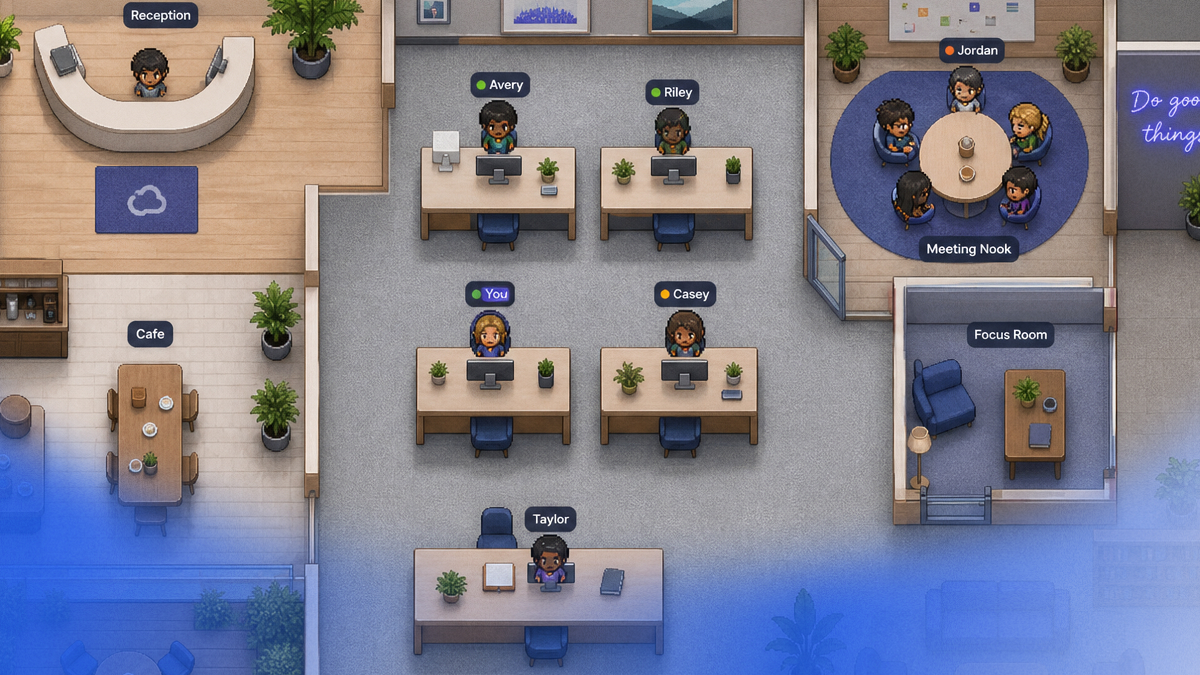
While Slack Huddles provide an excellent solution for immediate talk, they are most effective when users know exactly when to start one. This is where the concept of "team presence" becomes essential. Tools like Hurbly.ai complement communication features by providing a visual map of who is actually available. While Slack Huddles facilitate the conversation, seeing a colleague's real-time status helps prevent unnecessary interruptions during deep work phases.
Integrating the visibility provided by Hurbly.ai with the communication power of Slack Huddles creates a more cohesive virtual office. For example, if you see a teammate is "focused" on their virtual office dashboard, you might wait to invite them to Slack Huddles until their status changes to "available." This synergy reduces the cognitive load on employees and ensures that Slack Huddles are used at the most opportune moments, respecting everyone's individual workflow and productivity.
Best Practices for Using Slack Huddles in 2026
To maximize the utility of Slack Huddles, teams should establish clear internal etiquette. Because Slack Huddles are designed for speed, it is generally recommended to keep these sessions under 10 or 15 minutes. If a discussion requires a formal agenda or more than 30 minutes of time, it may be better suited for a scheduled meeting rather than spontaneous Slack Huddles. Using the "invite" feature within the huddle interface allows you to pull in specific experts only when their input is needed.
| Feature | Benefit for Remote Teams |
|---|---|
| Audio-First Design | Reduces "camera fatigue" and allows for multitasking. |
| Screen Drawing | Facilitates clear visual feedback during Slack Huddles. |
| Persistent Threads | Saves all shared resources automatically for later review. |
| Presence Sync | Shows when users are active in Slack Huddles to others. |
Another effective strategy is using Slack Huddles for "office hours" or "coworking blocks." A lead developer or manager can open one of the Slack Huddles and leave it active, allowing team members to drop in and out as they encounter blockers. This open-door policy, supported by the technical infrastructure of Slack Huddles, fosters a culture of transparency and rapid problem-solving that is often missing in remote-first environments.
Future Trends in Spontaneous Digital Communication
As we move through 2026, the integration of AI into Slack Huddles is becoming more prevalent. AI assistants can now join Slack Huddles to provide real-time summaries or action items based on the audio transcript. This ensures that the informal nature of Slack Huddles does not result in a lack of accountability. When a decision is made during one of these sessions, the AI can automatically update project management boards or notify relevant stakeholders.
Furthermore, the boundary between presence platforms and communication tools is blurring. By combining the real-time availability data from Hurbly.ai with the instant connectivity of Slack Huddles, organizations can recreate the "watercooler effect" digitally. This combination ensures that Slack Huddles remain a tool for connection rather than a source of distraction. As remote work continues to dominate the global economy, mastering the use of Slack Huddles will remain a core competency for any high-performing digital team.