Enhancing Team Efficiency Through Real-Time Presence and Time Productivity
In this article

Enhancing Team Efficiency Through Real-Time Presence and Time Productivity
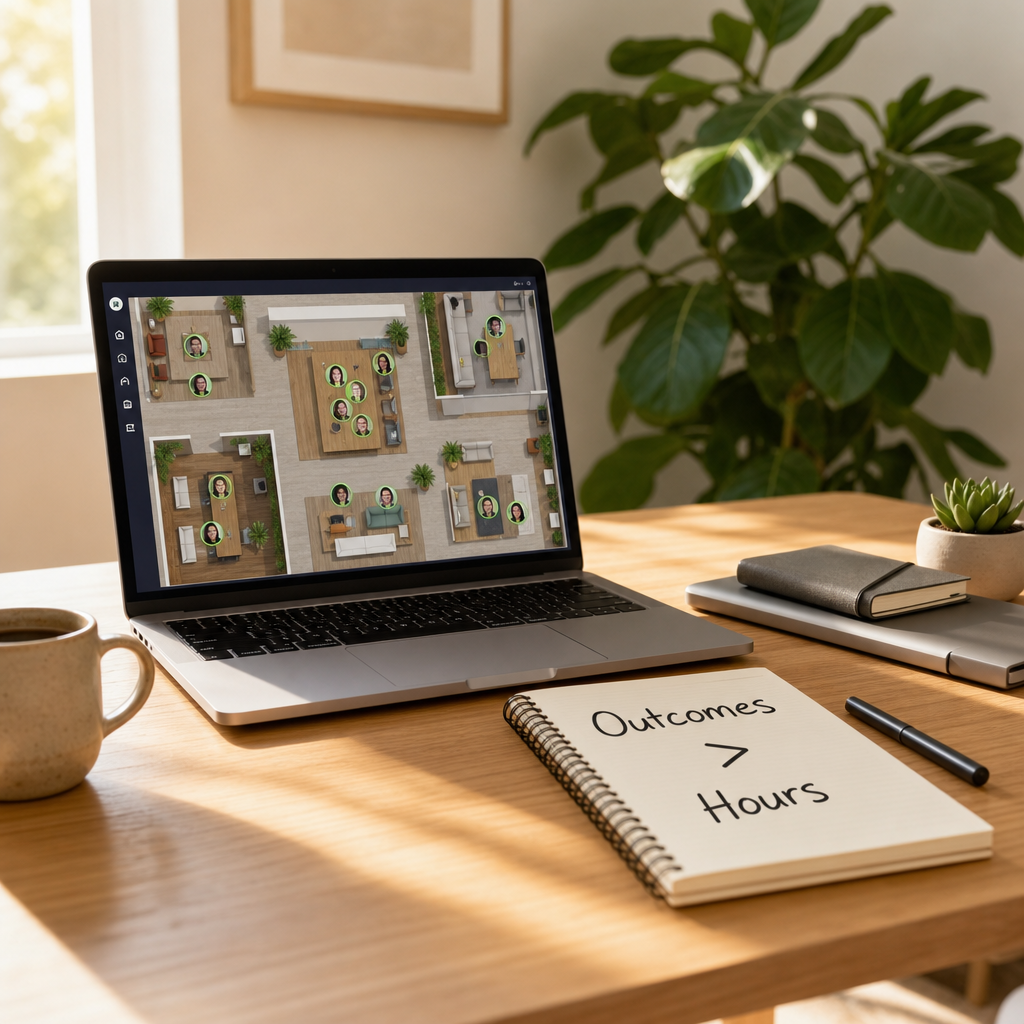
Understanding how team members interact in a digital workspace is essential for maintaining high levels of time productivity. In a traditional office, you can glance across the room to see if a colleague is busy, on a call, or available for a quick question. In remote settings, this visibility is often lost, leading to fragmented communication and constant interruptions. By utilizing a virtual office platform like Hurbly.ai, teams can regain this spatial awareness, ensuring that every interaction is timed perfectly to support collective time productivity.
The core functionality of a virtual office involves real-time status indicators that reflect the current state of every team member. Instead of guessing availability, users see clear visual cues showing who is deeply focused, who is currently in a meeting, and who is open for a chat. This transparency reduces the cognitive load of coordinating simple tasks, allowing employees to manage their time productivity more effectively by avoiding the "ping-and-wait" cycle common in standard messaging apps.
How Virtual Offices Streamline Daily Operations
A virtual office functions by creating a persistent digital environment where presence is automated. When a user joins the platform, their status updates based on their activity or manual selection. This system is relevant because it eliminates the need for excessive "status check" messages. When teams know exactly when to reach out, they protect their individual time productivity and minimize the disruptions that occur from poorly timed notifications.
To maximize time productivity, the platform facilitates spontaneous interactions that mimic "watercooler" moments. These quick, informal conversations often resolve issues faster than a scheduled thirty-minute video conference. By reducing the reliance on formal calendars for every minor query, the organization fosters a more fluid workflow. This shift in communication dynamics is a primary driver for improving overall time productivity across distributed departments.
Key Features for Managing Distributed Team Workflow
Effective digital collaboration requires specific tools that prioritize clarity and speed. A virtual office environment offers several features designed to optimize time productivity:
- Real-Time Status Indicators: Visual markers that show if a person is available, away, or in "deep work" mode.
- Instant Audio Rooms: The ability to jump into a quick voice conversation without generating a meeting link.
- Focus Mode Protections: Settings that signal to the team that a member should not be disturbed, preserving their time productivity.
- Spatial Grouping: Organizing team members into digital "rooms" based on their current project or department.
By integrating these features, Hurbly.ai helps teams maintain a steady rhythm. When a developer knows a designer is available, they can resolve a UI bottleneck in seconds. This immediate access prevents small hurdles from becoming day-long delays, directly impacting the team's total time productivity.
Comparative Benefits of Spontaneous Collaboration
| Traditional Remote Setup | Virtual Office Environment (Hurbly.ai) | Impact on Time Productivity |
|---|---|---|
| Scheduled video calls for every sync | Instant, "knock-to-talk" interactions | High: Reduces meeting fatigue |
| Hidden availability status | Transparent, real-time presence | High: Prevents interruptions |
| Reliance on text-heavy chat | Balanced voice and visual cues | Medium: Faster information exchange |
| Isolated working silos | Integrated digital workspace | High: Increases team cohesion |
The transition from a siloed environment to an integrated digital office ensures that time productivity remains a priority. In 2026, the ability to see and interact with colleagues in real-time is no longer a luxury but a requirement for competitive remote organizations. This structure allows for a more natural flow of information, which is the foundation of sustained time productivity.
Implementing Presence Tools for Long-Term Success
To successfully implement a presence-based platform, teams should establish clear protocols for how statuses are used. For instance, defining what "Focus Mode" means for a specific department ensures that everyone respects the boundaries required for high time productivity. When these norms are established, the virtual office becomes a powerful engine for output rather than just another communication channel.
Furthermore, the data provided by presence indicators can help managers identify patterns in team engagement. If certain periods of the day show high levels of "Meeting" statuses, leadership can adjust schedules to carve out more dedicated blocks for deep work. This proactive approach to managing time productivity ensures that the team is not just busy, but actually moving toward their strategic goals.
Why Real-Time Visibility Matters in 2026
As we move through 2026, the distinction between "being online" and "being available" has become critical for organizational health. Tools like Hurbly.ai bridge the gap between physical proximity and digital flexibility. By providing a clear map of the team's current state, these platforms allow individuals to take ownership of their time productivity while remaining accessible to their peers.
Ultimately, the goal of a virtual office is to make remote work feel less remote. When you can see your coworkers' presence, the psychological distance decreases, and the speed of collaboration increases. This environment supports a culture where time productivity is valued, and unnecessary administrative friction is removed, allowing professionals to focus on the work that truly matters.

