Optimizing Remote Collaboration and Reducing Time Waste in 2026
In this article

Optimizing Remote Collaboration and Reducing Time Waste in 2026
The shift toward distributed work has introduced significant challenges in how teams coordinate daily activities. Without a physical space, professionals often struggle to identify when a colleague is available for a quick question or deep in focus. This lack of visibility frequently leads to time waste, as employees send messages that go unanswered for hours or interrupt others during critical tasks. Understanding team presence is no longer just a convenience; it is a structural necessity for maintaining high productivity levels in a digital environment.
By utilizing platforms like Hurbly.ai, organizations can recreate the spontaneous interaction of a physical office. This technology provides real-time indicators that show whether a team member is currently in a meeting, focusing on a specific project, or available for a brief chat. Eliminating the need to guess someone's status prevents the time waste associated with unnecessary "Are you there?" pings and helps maintain a steady workflow across different time zones.
The Impact of Coordination Friction on Productivity
Coordination friction occurs when the effort required to start a conversation exceeds the value of the interaction itself. In many remote setups, a simple two-minute clarification requires a scheduled calendar invite, which is a primary source of time waste. When every interaction must be formal, the speed of decision-making slows down significantly. A virtual office environment addresses this by allowing instant, informal audio or video connections that bypass the traditional scheduling process.
Furthermore, the psychological barrier of "disturbing" a coworker often leads to delays in project execution. If an employee is unsure of a peer's availability, they might wait until a weekly sync to ask a question, resulting in days of time waste. Real-time presence tools remove this uncertainty. By seeing a "focused" status, a team member knows to wait, whereas an "available" status signals that a quick interruption is acceptable and efficient.
Strategies to Eliminate Time Waste in Virtual Offices
To effectively manage a remote team in 2026, leaders must implement systems that prioritize transparency and accessibility. Reducing time waste requires a combination of the right tools and clear communication protocols.
- Real-Time Status Indicators: Use visual cues to signal availability, reducing the time waste of checking multiple messaging apps to see if someone is online.
- Spontaneous Interactions: Encourage "walk-up" conversations for quick queries instead of booking 30-minute meetings for 5-minute topics.
- Focus Mode Protection: Clearly mark periods of deep work to prevent external interruptions that cause cognitive time waste and reset mental focus.
- Centralized Presence: Maintain a single source of truth for team location and availability to avoid the time waste of searching through different platforms.
| Feature | Impact on Efficiency | Prevention of Time Waste |
|---|---|---|
| Live Presence | High | Prevents unnecessary follow-ups |
| Instant Audio | High | Replaces long email chains |
| Focus Indicators | Medium | Protects deep work sessions |
| Virtual Rooms | Medium | Groups people by project context |
How Hurbly.ai Facilitates Fluid Communication
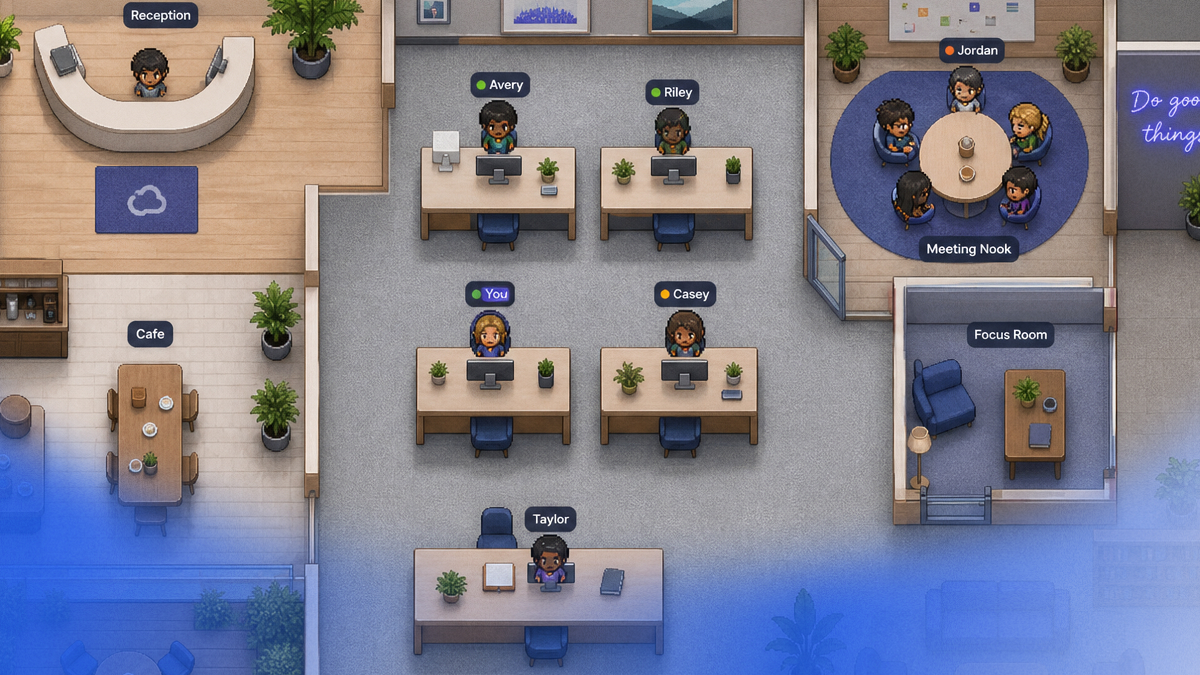
Hurbly.ai functions as a digital layer over the traditional workspace, specifically designed to bridge the gap between remote isolation and office-like connectivity. The platform displays team members in a shared digital space, making it easy to see who is collaborating and who is working solo. This visibility is crucial for managers who want to support their teams without micromanaging, thereby avoiding the time waste of constant status reports.
The platform enables users to start conversations with a single click. This immediacy is a direct solution to the time waste found in traditional video conferencing tools that require link generation and invitation emails. By making digital presence tangible, Hurbly.ai ensures that the social and professional fabric of a team remains intact, regardless of where individual members are located.
Improving Information Flow and Decision Speed
In a fast-paced market, the ability to make quick decisions is a competitive advantage. When teams rely on asynchronous messaging for every small detail, the cumulative time waste can derail entire product launches. A virtual office allows for "over-the-shoulder" learning and quick huddles that resolve blockers in seconds. This directness minimizes the time waste inherent in waiting for a reply in a crowded chat channel.
Effective use of a virtual office also reduces the "meeting fatigue" that characterizes many remote roles. Since quick issues are handled instantly, the need for long, recurring meetings diminishes. This optimization of the workday allows employees to reclaim hours previously lost to time waste, directing that energy toward high-value tasks and creative problem-solving.
Conclusion and Implementation Benefits
Adopting a presence-based communication strategy is essential for any modern distributed team. By focusing on visibility and reducing the friction of interaction, companies can significantly lower the time waste that typically plagues remote work. Tools like Hurbly.ai provide the necessary infrastructure to keep teams aligned and engaged.
The transition to a virtual office environment results in a more cohesive culture where information flows naturally. When team members can see each other and interact without barriers, the overall time waste decreases, and the quality of collaboration improves. Ultimately, providing a clear view of "who is doing what" is the most effective way to ensure that remote teams remain productive, connected, and free from the time waste of digital silos.