Understanding and Overcoming Toxic Productivity in Remote Work Environments

In this article

Understanding and Overcoming Toxic Productivity in Remote Work Environments
Toxic productivity is the internal or external pressure to remain constantly active and "on," often at the expense of physical health, mental well-being, and actual quality of work. In 2026, as remote and hybrid work models have become the global standard, this phenomenon has evolved. It is no longer just about working long hours; it is about the obsession with being visible and proving one's worth through constant digital activity. When employees feel they must respond to every notification instantly to prove they are working, they fall into the trap of toxic productivity, which ultimately leads to burnout and decreased creative output.
The rise of distributed teams has inadvertently fueled toxic productivity by removing the natural physical cues of a traditional office. Without seeing colleagues at their desks or taking breaks, individuals often feel guilty for stepping away from their screens. This guilt drives a cycle of toxic productivity where "busyness" is mistaken for effectiveness. To combat this, organizations are looking for ways to restore transparency and trust, ensuring that presence is understood without requiring constant, performative digital noise.
The Impact of Toxic Productivity on Team Mental Health
The psychological toll of toxic productivity is significant, manifesting as chronic stress and a sense of never being "done" with work. When a culture prioritizes quantity of tasks over the quality of outcomes, employees experience high levels of anxiety. This environment of toxic productivity makes it difficult for individuals to disconnect, as the boundaries between professional and personal life become blurred. In 2026, mental health professionals identify the inability to rest without feeling guilty as a primary symptom of this modern workplace challenge.
Furthermore, toxic productivity erodes team cohesion. When every team member is hyper-focused on their own perceived output to avoid being seen as "lazy," spontaneous collaboration suffers. People become hesitant to reach out for help or offer support because they are trapped in the cycle of toxic productivity, fearing that any time spent not "producing" is wasted. This isolation reduces the collective intelligence of the group and makes the work environment feel mechanical and cold rather than collaborative and human.
Strategies to Identify and Mitigate Toxic Productivity
Identifying toxic productivity requires looking beyond simple metrics like hours logged. Red flags include a decline in employee morale, high turnover rates, and a "hustle culture" that glamorizes overwork. To mitigate toxic productivity, leaders must redefine success based on objectives and results rather than constant availability. Implementing clear communication protocols and setting boundaries for "deep work" can help shield employees from the relentless demands of toxic productivity.
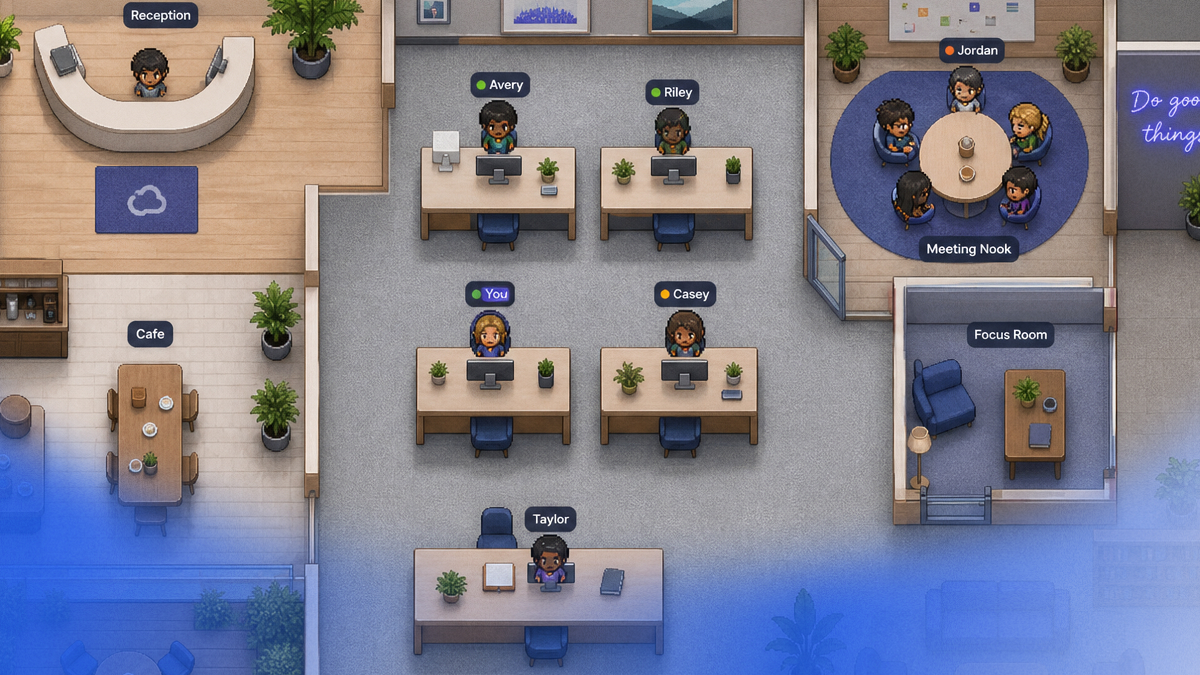
A practical approach to reducing toxic productivity involves creating a "presence-aware" culture. Platforms like Hurbly.ai help teams achieve this by providing real-time visibility into who is focused, in a meeting, or available for a quick chat. By seeing that a colleague is currently "focused," others are less likely to interrupt, which reduces the pressure for the focused individual to respond immediately. This transparency helps dismantle toxic productivity by validating that being "away" or "busy" is a normal and necessary part of a productive workday.
| Aspect | Healthy Productivity | Toxic Productivity |
|---|---|---|
| Focus | Quality and outcomes | Quantity and "busyness" |
| Boundaries | Clear work-life separation | Constant availability |
| Communication | Intentional and asynchronous | Reactive and urgent |
| Well-being | Rest is seen as essential | Rest is viewed as a failure |
| Presence | Transparent and shared | Hidden or performative |
How Real-Time Presence Tools Counteract Toxic Productivity
Real-time technology plays a crucial role in eliminating the guesswork that often leads to toxic productivity. When team members can see each other’s status in a virtual office, the need for "check-in" messages—which often trigger anxiety—diminishes. Hurbly.ai facilitates this by replicating the spontaneous interactions of a physical office. This reduces toxic productivity because users don't feel the need to stay "green" on a chat app just to prove they are at their desks; their actual status is visible and respected.
By using tools that show real-time availability, teams can move away from the rigid, scheduled-meeting-heavy culture that often masks toxic productivity. Instead of filling calendars with meetings to prove work is happening, teams can engage in quick, informal conversations when the status indicator shows someone is free. This fluidity reduces the administrative burden of remote work and helps prevent the exhaustion associated with toxic productivity, allowing for a more natural and sustainable pace of work.
Building a Sustainable Future Without Toxic Productivity
To build a sustainable future in 2026, companies must actively work to dismantle the structures that support toxic productivity. This involves training managers to recognize the difference between high performance and burnout-inducing habits. Encouraging "unplugged" time and modeling healthy behavior from the top down are essential steps in curing a culture of toxic productivity. When leadership prioritizes well-being, the rest of the organization feels empowered to do the same.
Ultimately, the goal is to create an environment where technology serves the human element of work, not the other way around. By integrating solutions like Hurbly.ai, companies can foster a sense of belonging and visibility that doesn't rely on the harmful patterns of toxic productivity. Promoting transparency and spontaneous connection allows remote teams to thrive, ensuring that productivity remains a positive force for growth rather than a source of stress and depletion. Overcoming toxic productivity is not just about working less; it is about working better and more mindfully.