Understanding the Benefits and Mechanics of a Virtual Office in 2026

In this article

Understanding the Benefits and Mechanics of a Virtual Office in 2026
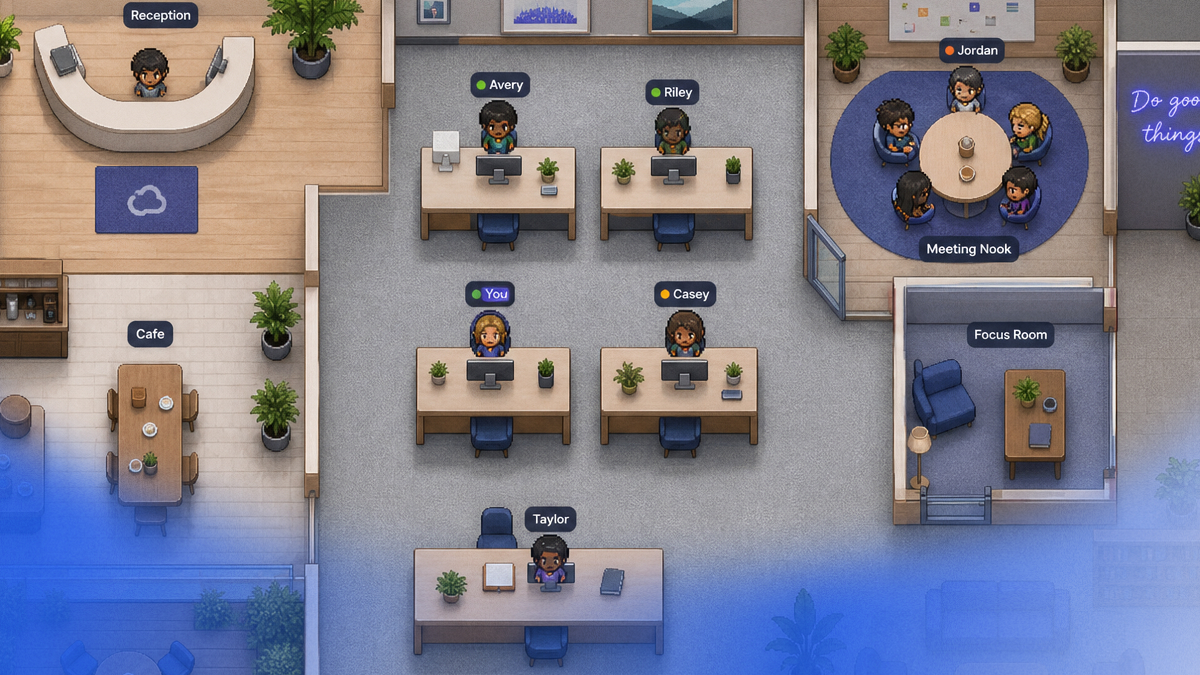
A virtual office serves as a centralized digital workspace that allows remote teams to collaborate as if they were in the same physical building. Unlike traditional remote setups that rely heavily on fragmented messaging apps, a virtual office integrates presence indicators and real-time communication tools. This environment ensures that every team member, regardless of their physical location, remains visible and accessible to their colleagues throughout the workday.
Modern organizations utilize a virtual office to bridge the gap between flexibility and team cohesion. By using platforms like Hurbly.ai, companies can monitor real-time availability, seeing exactly who is focused on a task, who is currently in a meeting, or who is available for a quick chat. This visibility reduces the psychological distance often felt in remote work, fostering a more connected and transparent professional culture.
How a Virtual Office Facilitates Real-Time Collaboration
The core functionality of a virtual office revolves around instant accessibility. Instead of sending a message and waiting indefinitely for a reply, users can see the live status of their peers. When a colleague's status indicates they are free, a user can initiate a spontaneous conversation. This mimics the "desk drive-by" interaction found in physical workplaces, which is essential for solving urgent problems or brainstorming without the friction of scheduling formal video conferences.
Operating within a virtual office involves several key technical and social components:
- Presence Indicators: Visual cues that display whether a user is active, away, or in "deep work" mode.
- Instant Audio/Video: The ability to jump into a conversation with one click, bypassing the need for meeting links or calendar invites.
- Contextual Awareness: Understanding the team's workflow at a glance, which helps in choosing the right moment to interrupt or collaborate.
Improving Team Productivity Through a Virtual Office
Implementing a virtual office significantly impacts how time is managed within a distributed team. By providing a clear view of everyone's current state, it eliminates the "meeting fatigue" caused by over-scheduling. In a virtual office, short, five-minute syncs often replace thirty-minute scheduled calls, allowing projects to move forward faster. This efficiency is particularly valuable for freelancers and agile development teams who require rapid feedback loops.
Furthermore, a virtual office helps maintain a healthy work-life balance by clearly defining when a person is "at their desk" and when they are offline. In 2026, as global teams span multiple time zones, having a virtual office that tracks local availability ensures that communication remains respectful of individual schedules. This structured yet flexible approach prevents burnout while maintaining high levels of operational output.
Why Modern Remote Teams Choose a Virtual Office
The transition to a virtual office is often driven by the need to recover the social capital lost in standard remote work. Traditional tools often feel transactional; however, a virtual office creates a shared space where informal interactions can flourish. These spontaneous moments are where company culture is built and where innovative ideas are frequently born. By using Hurbly.ai, teams can replicate these organic interactions digitally.
| Feature | Traditional Remote Work | Virtual Office Environment |
|---|---|---|
| Communication | Scheduled and formal | Spontaneous and fluid |
| Visibility | Hidden until messaged | Always visible status |
| Coordination | High friction (email/calendar) | Low friction (instant entry) |
| Culture | Isolated tasks | Shared digital presence |
Choosing a virtual office is a strategic move for any organization looking to optimize its distributed workforce. It provides the necessary infrastructure to support complex workflows while ensuring that human connection remains at the center of the digital experience. As the professional landscape continues to evolve, the virtual office stands as the primary solution for maintaining team unity in a decentralized world.
Essential Features for an Effective Virtual Office
To be effective, a virtual office must prioritize ease of use and data accuracy. The technology must update in real-time to ensure that the status shown for a team member is their actual current state. If a virtual office lacks precision, it can lead to interruptions during focused work, defeating the purpose of the platform. Reliability and low latency are the technical foundations that allow these digital spaces to function as true replacements for physical offices.
Beyond technical specs, a virtual office should offer customization to fit different team sizes and styles. Whether it is a small group of three or a large department of fifty, the virtual office must scale to show relevant connections without becoming cluttered. This scalability ensures that as a company grows, its digital headquarters remains a productive and inviting place for every employee to log in to every day.