Understanding the Core Virtual Office Benefits for Remote Teams in 2026

In this article

Understanding the Core Virtual Office Benefits for Remote Teams in 2026
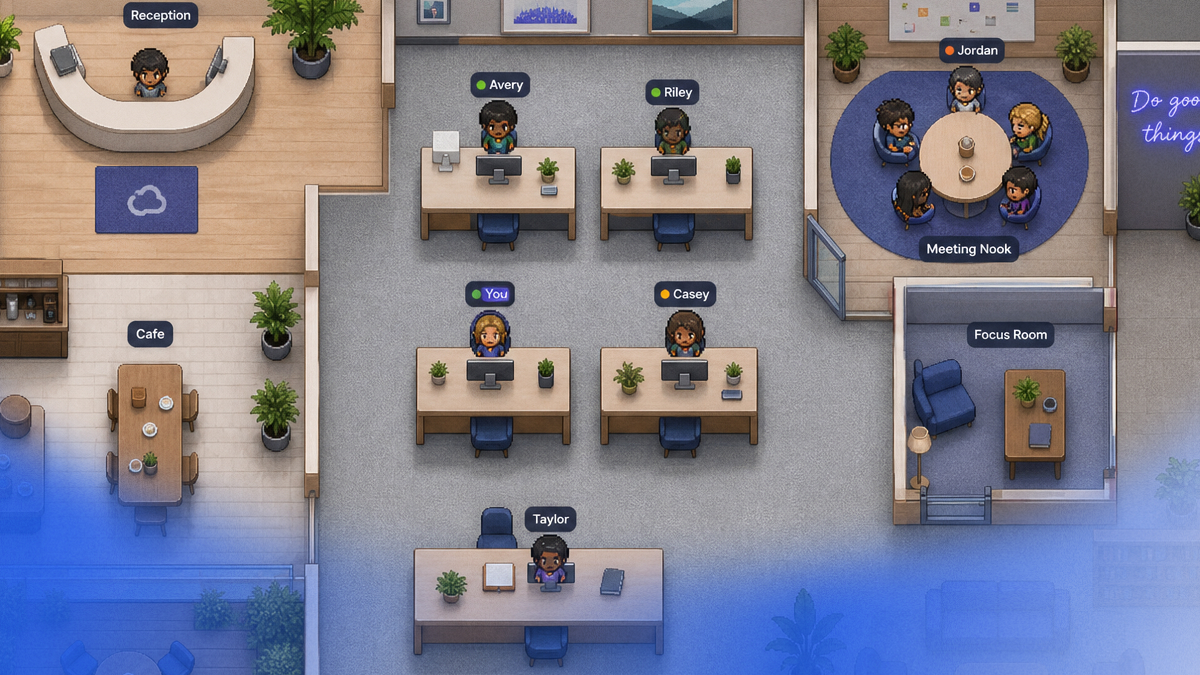
A virtual office is a digital workspace designed to replicate the collaborative environment of a physical location. Unlike traditional communication tools that rely on asynchronous messaging, a virtual office provides a persistent visual layer where team members "co-exist" in real-time. By using platforms like Hurbly.ai, companies can bridge the gap between remote flexibility and the spontaneous interaction found in traditional settings. One of the primary virtual office benefits is the elimination of the "black box" effect, where managers and peers have no visibility into who is actually available or busy at any given moment.
In 2026, the shift toward distributed work has highlighted that simple chat apps are often insufficient for maintaining team cohesion. A dedicated digital environment allows employees to see presence indicators, such as who is in a deep-focus mode, who is currently in a meeting, or who is available for a quick chat. This transparency is among the most significant virtual office benefits, as it reduces the anxiety associated with "pinging" a colleague and waiting indefinitely for a response.
Enhancing Real-Time Collaboration and Presence
Real-time presence technology functions by displaying the live status of every team member on a centralized dashboard. When a user logs into their digital workspace, they appear in a specific "room" or status area. This setup provides immediate virtual office benefits by allowing coworkers to start instant conversations without the friction of scheduling a formal video call. Instead of sending a calendar invite for a five-minute question, a user can simply see that a colleague is free and initiate a quick audio or video interaction.
The psychological impact of seeing your team "together" in a digital space cannot be overstated. When analyzing virtual office benefits, the reduction in professional isolation stands out. Employees feel more connected to the company culture when they can see their peers working alongside them, even if they are thousands of miles apart. This visibility fosters a sense of accountability and belonging that text-based platforms often fail to provide.
Strategic Virtual Office Benefits for Operational Efficiency
Implementing a digital workspace leads to measurable improvements in how a business operates daily. By streamlining communication, organizations can significantly reduce the number of unnecessary meetings that clutter calendars. The following list outlines key virtual office benefits related to operational efficiency:
- Reduced Communication Friction: Instant access to colleagues removes the need for back-and-forth emails to check availability.
- Improved Focus Time: Status indicators like "Deep Work" signal to the team not to disturb a specific person, protecting cognitive load.
- Faster Decision Making: Spontaneous "watercooler" moments allow for quick problem-solving that would otherwise wait for a weekly sync.
- Enhanced Transparency: Leadership can see team activity levels at a glance without resorting to invasive micro-management tools.
These virtual office benefits ensure that the workflow remains fluid. In a traditional remote setup, a simple question might take three hours to answer due to notification delays. In a virtual office, that same question is often resolved in thirty seconds because the availability of the expert is clearly visible to everyone on the team.
Comparing Traditional Remote Work vs. Virtual Office Environments
To better understand why modern teams are migrating to digital presence platforms, it is helpful to compare the standard remote experience with the enhanced capabilities of a virtual workspace. The table below highlights how specific virtual office benefits change the daily work experience.
| Feature | Standard Remote Work (Chat/Email) | Virtual Office (Presence-Based) |
|---|---|---|
| Visibility | Hidden; status is often inaccurate. | Real-time; shows current activity and focus. |
| Interaction | Scheduled; requires links and invites. | Spontaneous; one-click "walk-up" calls. |
| Culture | Fragmented; feels like working alone. | Unified; feels like a shared office space. |
| Coordination | High effort; many "Are you there?" pings. | Low effort; visual cues guide interaction. |
Choosing a platform that offers these virtual office benefits allows a company to scale without losing the human element of collaboration. While traditional tools focus on the delivery of tasks, a virtual office focuses on the connection between the people performing those tasks.
Why Virtual Office Benefits Matter for Freelancers and Distributed Teams
Freelancers and small distributed agencies often face the highest risk of communication silos. For these groups, the virtual office benefits include a professionalized structure that mimics a headquarters. It provides a central "place" to go to work, which helps in mentally separating professional life from home life. When a freelancer joins a client's digital workspace, they become a visible part of the team rather than just a name on a task list.
Furthermore, for global teams spanning multiple time zones, the virtual office benefits extend to better synchronization. Seeing who is waking up in London while the New York team is finishing their day helps in managing handovers more effectively. By integrating Hurbly.ai into their daily stack, distributed teams ensure that no one is left out of the loop, regardless of their physical location.
Long-Term Impact on Retention and Employee Satisfaction
The final set of virtual office benefits relates to long-term talent retention. Employees in 2026 value flexibility, but they also value clarity and connection. A virtual office provides the freedom to work from anywhere while maintaining the social and professional ties that prevent burnout. When communication is easy and the team feels present, job satisfaction naturally increases.
Investing in these virtual office benefits is a strategic move for any organization looking to optimize its remote or hybrid model. By prioritizing real-time visibility and spontaneous engagement, companies create a more resilient and agile workforce. The transition from a collection of isolated individuals to a synchronized team is the ultimate goal of adopting a virtual office framework. Utilizing the right technology ensures that these virtual office benefits are realized across every level of the organization, from entry-level staff to executive leadership.