Enhancing Remote Collaboration with Virtual Office Software

In this article

Enhancing Remote Collaboration with Virtual Office Software
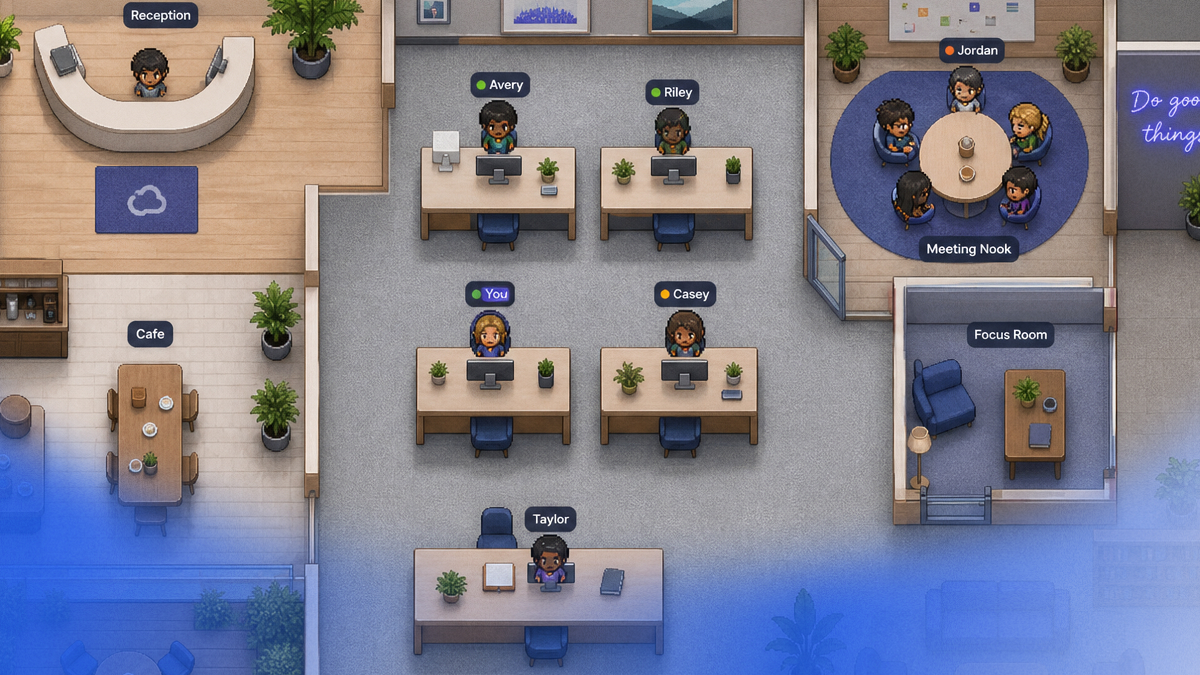
Virtual office software serves as a digital workspace designed to bridge the gap between remote team members. Unlike traditional communication tools that rely on asynchronous messaging or pre-planned meetings, this technology creates a persistent environment where presence is visible in real-time. By using virtual office software, organizations can replicate the spontaneous interactions found in physical offices, allowing employees to see who is currently at their desk, who is deep in focus mode, or who is available for a quick chat.
In 2026, the necessity for streamlined digital environments has led to the evolution of virtual office software into a central hub for daily operations. These platforms integrate presence indicators that update automatically based on user activity. For instance, Hurbly.ai provides a visual representation of a distributed team, making it easier to identify the right moment to initiate a conversation without the friction of checking calendars or sending "Are you there?" messages.
How Virtual Office Software Functions
The core functionality of virtual office software revolves around real-time status tracking and instant connectivity. When a user logs into the platform, their digital avatar or status icon reflects their current availability. This transparency is achieved through various technical indicators:
- Presence Detection: The software monitors active windows or manual status toggles to show if a teammate is online.
- Focus Modes: Users can signal they are doing deep work, which helps prevent interruptions while still remaining "visible" to the team.
- Instant Audio/Video: Most virtual office software allows for one-click transitions from a status check to a live conversation, bypassing the need for meeting links.
By centralizing these functions, virtual office software reduces the cognitive load required to manage remote interactions. Instead of navigating multiple tabs, users stay within a single interface that maps out their entire organization's current state. This spatial awareness is a key differentiator of modern virtual office software compared to basic chat applications.
Why Real-Time Presence is Relevant for Teams
The primary challenge of remote work is the loss of "watercooler moments"—those unplanned interactions that often lead to quick problem-solving. Virtual office software addresses this by making the team's presence tangible. When employees use virtual office software, they feel less isolated because they can see their colleagues working alongside them in a shared digital space.
Implementing virtual office software is particularly relevant for:
- Distributed Teams: Bridging time zones by showing exactly who is active at any given moment.
- Agile Workflows: Facilitating rapid stand-ups and quick syncs that don't require formal scheduling.
- Onboarding: Helping new hires understand the team hierarchy and who to approach for specific questions by observing digital presence.
Furthermore, Hurbly.ai demonstrates how virtual office software can enhance transparency. When leadership and staff share the same digital floor, it fosters a culture of openness. The ability to see a manager's availability through virtual office software encourages more frequent, low-stakes communication, which is vital for maintaining team morale and alignment.
Comparing Communication Methods in the Digital Workspace
To understand the impact of virtual office software, it is helpful to compare it with traditional remote communication methods. The following table illustrates how different tools handle team interactions:
| Feature | Email/Messaging | Video Conferencing | Virtual Office Software |
|---|---|---|---|
| Spontaneity | Low (Asynchronous) | Low (Requires Links) | High (Instant Access) |
| Presence Visibility | Limited/Manual | None until call starts | Continuous/Real-time |
| Coordination Effort | Medium | High (Scheduling) | Low (Visual Cues) |
| Context Awareness | Poor | Medium | Excellent |
As shown, virtual office software fills a specific niche by providing high spontaneity and continuous visibility. While other tools are necessary for long-form documentation or formal presentations, virtual office software is the engine for daily, fluid collaboration.
Optimizing Workflow with Virtual Office Software
Integrating virtual office software into a company's tech stack requires a shift in how teams perceive "availability." In a traditional setting, being "online" often means being bombarded with notifications. However, effective virtual office software allows for nuanced status updates. A user might appear as "In a Meeting" or "Focusing," which informs colleagues that while the person is present, they should not be disturbed for non-urgent matters.
The adoption of Hurbly.ai as a primary virtual office software solution helps teams minimize "meeting fatigue." Since quick questions can be answered via a ten-second voice drop-in, the need for thirty-minute scheduled blocks decreases significantly. This efficiency is why virtual office software has become a staple for high-performance teams in 2026. By choosing the right virtual office software, companies ensure that their digital infrastructure supports both individual productivity and collective synergy.