Remote Team Engagement in 2026: Why Virtual Presence Beats Another Video Call
In this article

Remote team engagement in 2026 is not a video call problem. Most distributed teams have plenty of meetings. What they're missing is something harder to schedule: the feeling of being around other people while you work.
And that gap is showing up in the numbers.
The Isolation Problem Nobody Talks About
52% of the global workforce is now remote. The flexibility is real. The productivity data is mostly positive. But ask anyone who's been fully remote for more than a year about the parts that are harder — and you'll hear versions of the same thing.
It's not the work. It's the in-between moments.
The spontaneous "hey, do you have two minutes?" conversation that turns into a problem solved. The overheard comment that sparks an idea. The sense of shared purpose that comes from physically being in the same space as people working toward the same goal.
Video calls can replicate meetings. They can't replicate presence.
Teams that report the highest engagement scores in 2026 aren't the ones with the most Zoom calls. They're the ones that have created persistent digital spaces where people can be together — asynchronously, spontaneously, and without an agenda.
What "Virtual Presence" Actually Means
Virtual presence isn't a new term, but it has a specific meaning in the context of remote team tools: the ability to be visible and available to your teammates without being in an active meeting.
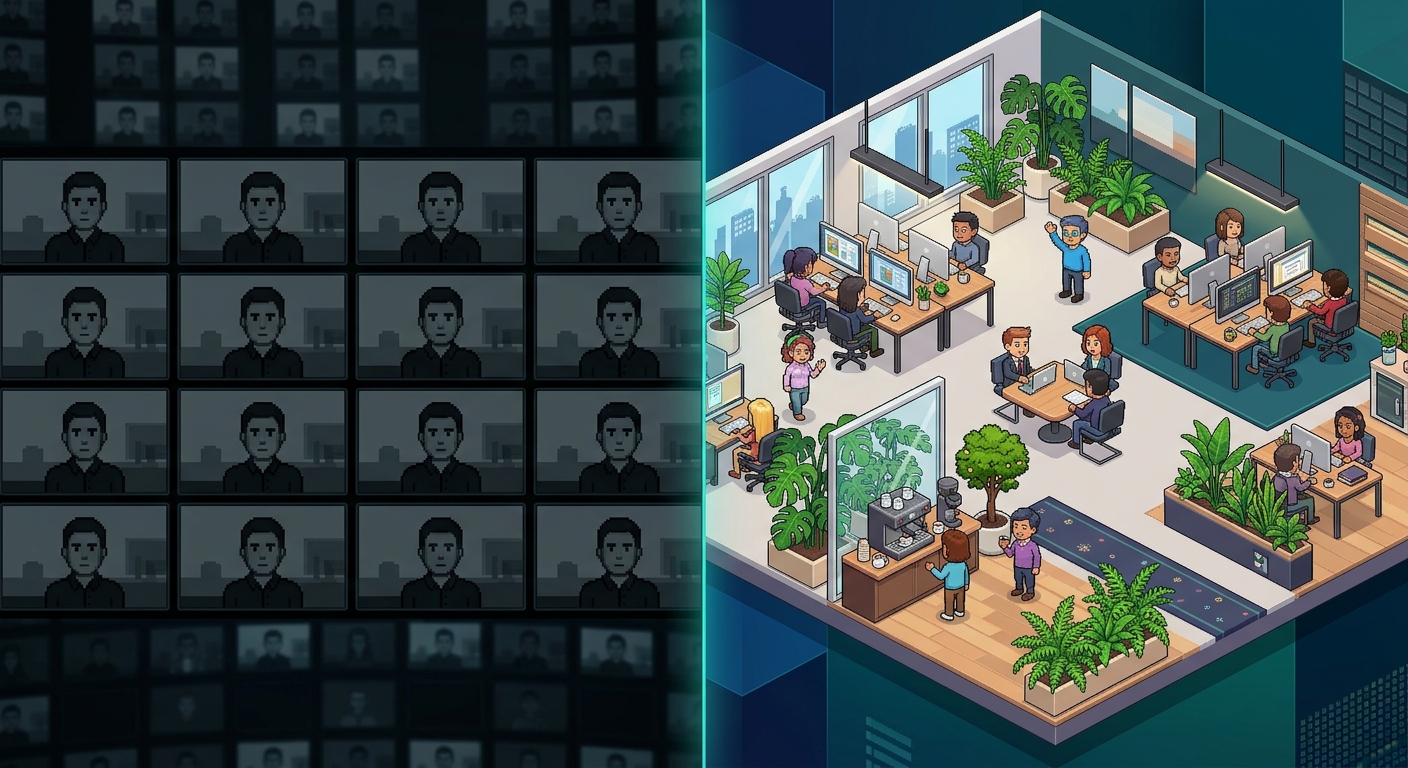
Think of it as the difference between an open office floor plan and a series of private video call rooms. In an open office, you notice when someone sits down nearby, you catch a fragment of a conversation, you feel the energy of the team around you. In back-to-back video calls, every interaction is formal, structured, and scheduled.
Virtual presence tools recreate the ambient awareness of physical space — digitally.
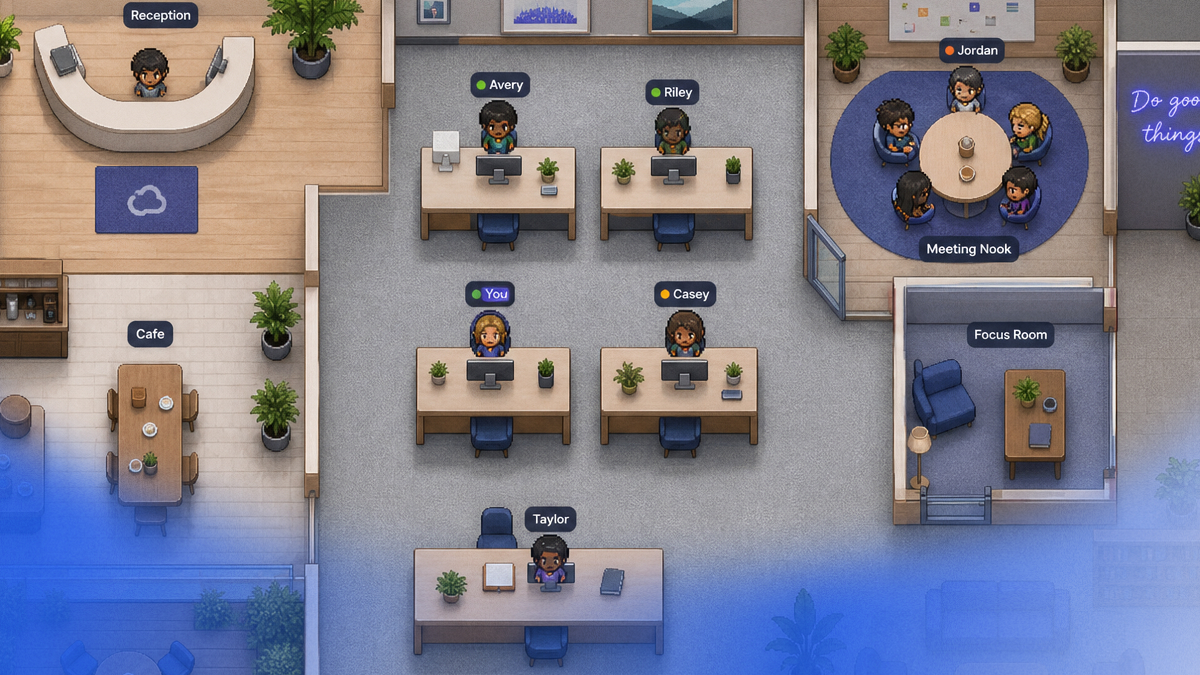
Platforms designed around virtual presence show team members as available at their "desk," allow for instant audio connection (like tapping someone on the shoulder), and create shared spaces that persist throughout the workday — not just during meetings.
Why This Matters for Engagement
Teams using spatial collaboration tools — virtual offices where people have a persistent presence — report 20–30% engagement improvements compared to teams relying on video conferencing alone.
The reason is simple: engagement isn't just about task completion. It's about belonging.
When remote employees feel like they're part of a team — not just working in parallel with a group of people they see on a screen three times a week — their motivation, creativity, and retention all improve.
The data on remote work attrition makes this clear. The employees who leave distributed companies first are rarely the ones struggling with the work itself. They're the ones who feel disconnected from the culture and the people.
4 Things High-Engagement Remote Teams Do Differently
- They have a "home base" that isn't a meeting room
The most engaged distributed teams designate a virtual space for the team to exist throughout the day — not just during stand-ups. People can pop in and out, work in parallel, and maintain the ambient awareness of a shared office. - They protect spontaneous interaction
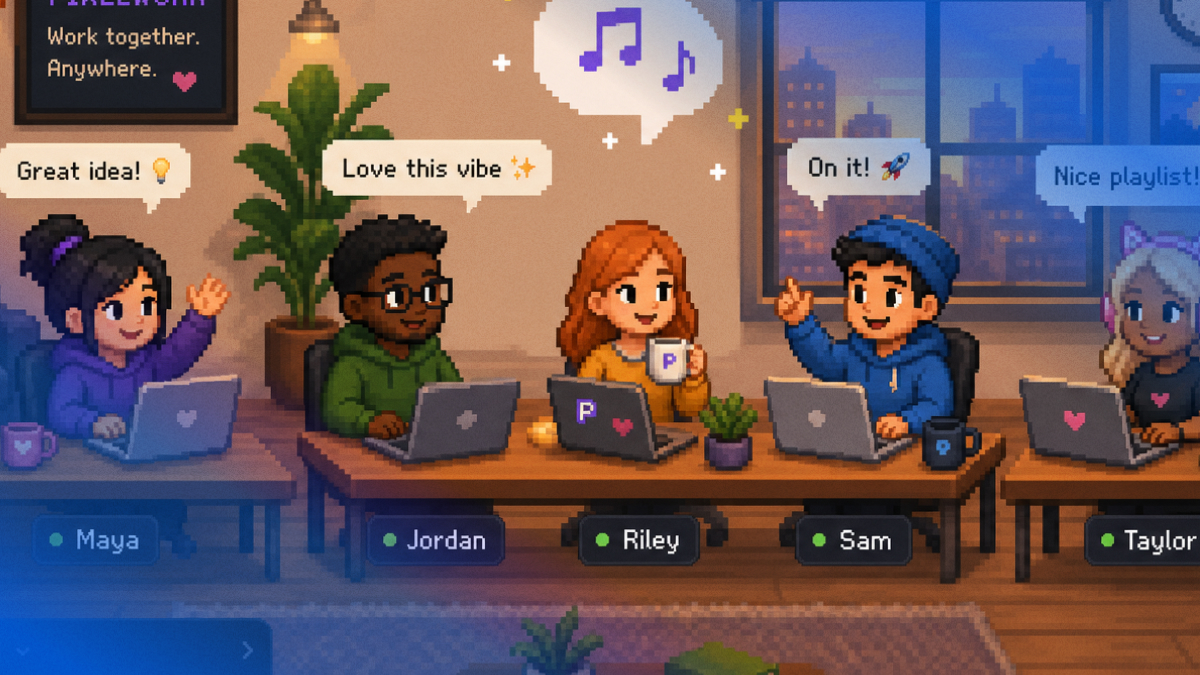
Scheduled meetings are necessary. But the best remote teams also create structure for unscheduled interaction — virtual coffee chats, open "work together" sessions, shared music channels. Anything that creates the texture of working alongside each other. - They measure belonging, not just productivity
Standard performance metrics (tasks completed, meetings attended) don't capture what makes remote teams thrive. High-engagement teams check in on how connected people feel — not just how much they're getting done. - They use tools built for presence, not just communication
Chat tools and video platforms are communication tools. They're not presence tools. The distinction matters. Teams that treat Slack as their primary team environment are optimizing for message speed — not for the experience of working together.
What Remote Teams Actually Need in 2026
The most successful distributed companies in 2026 aren't trying to replicate the office experience on a video call. They're building a digital culture that's native to remote work — with its own rituals, its own shared spaces, and its own version of presence.
Hurbly is built for that version of remote work: a virtual office where your team can work side by side, check in without scheduling a meeting, and actually feel like they're in the same room.
Try it free for 30 days. No credit card required. Your team deserves better than another video call.